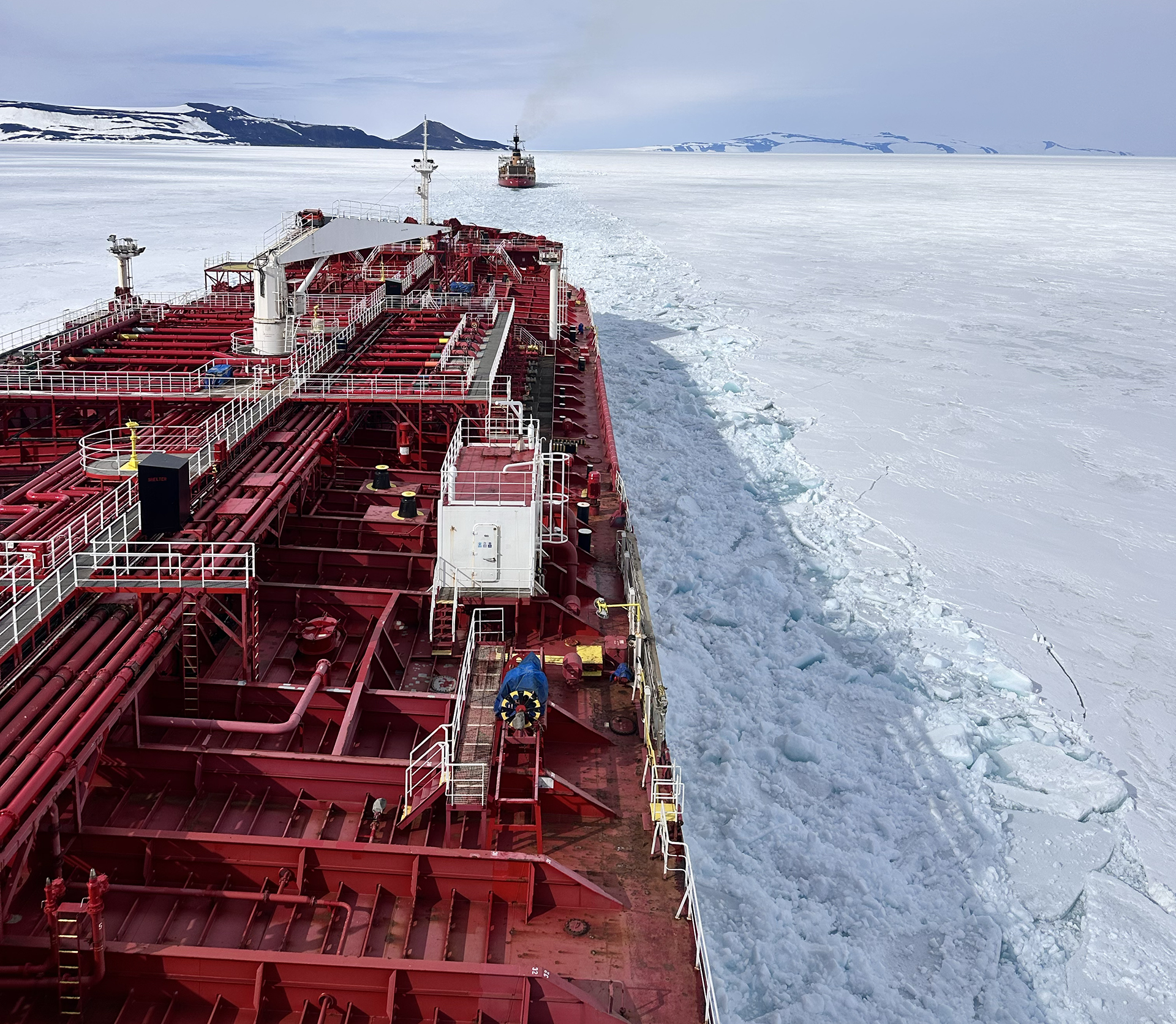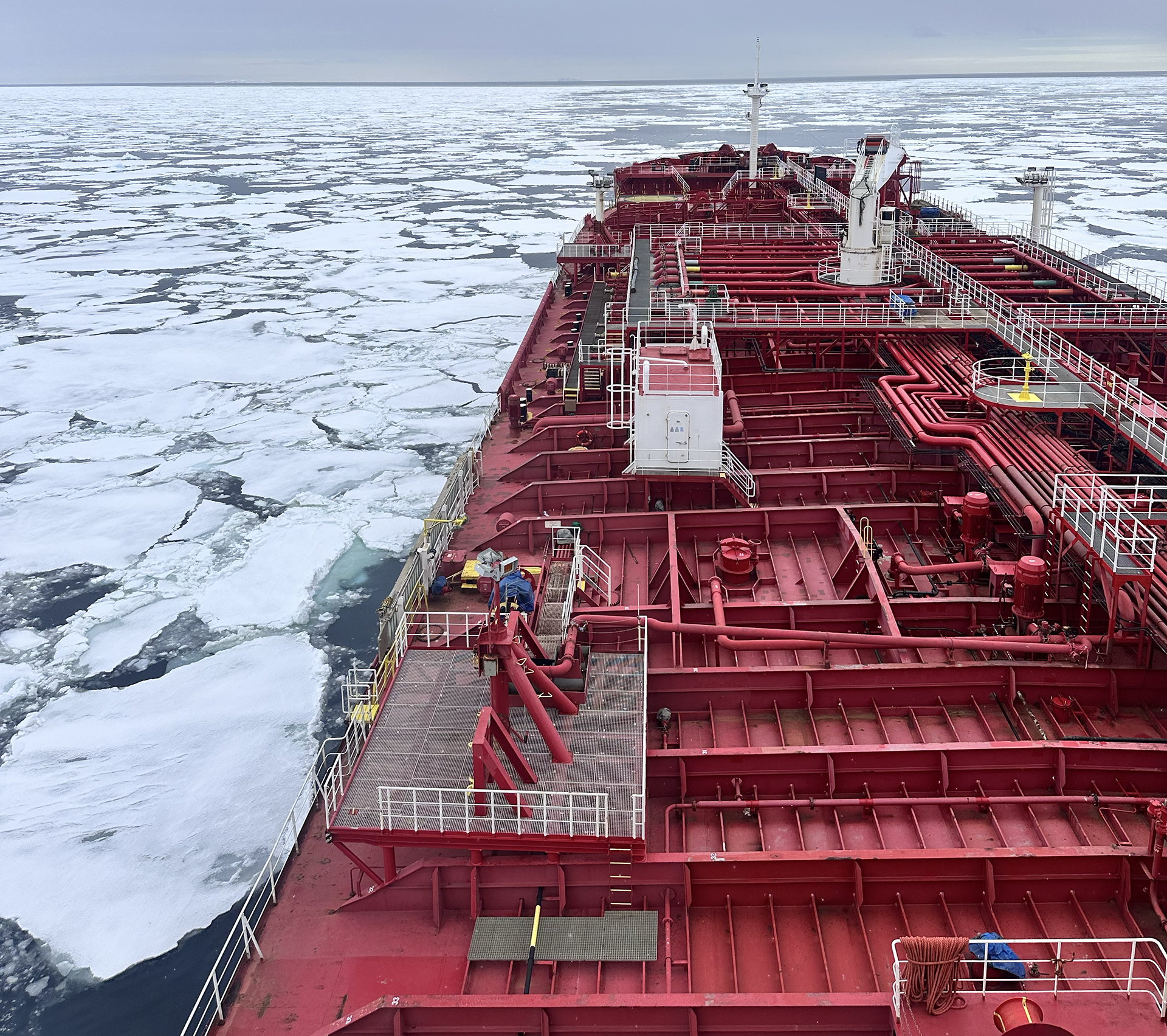
The following is excerpted from reports posted by Military Sealift Command. Photos sent by Stena Polaris Ice Captain Junior Jones.
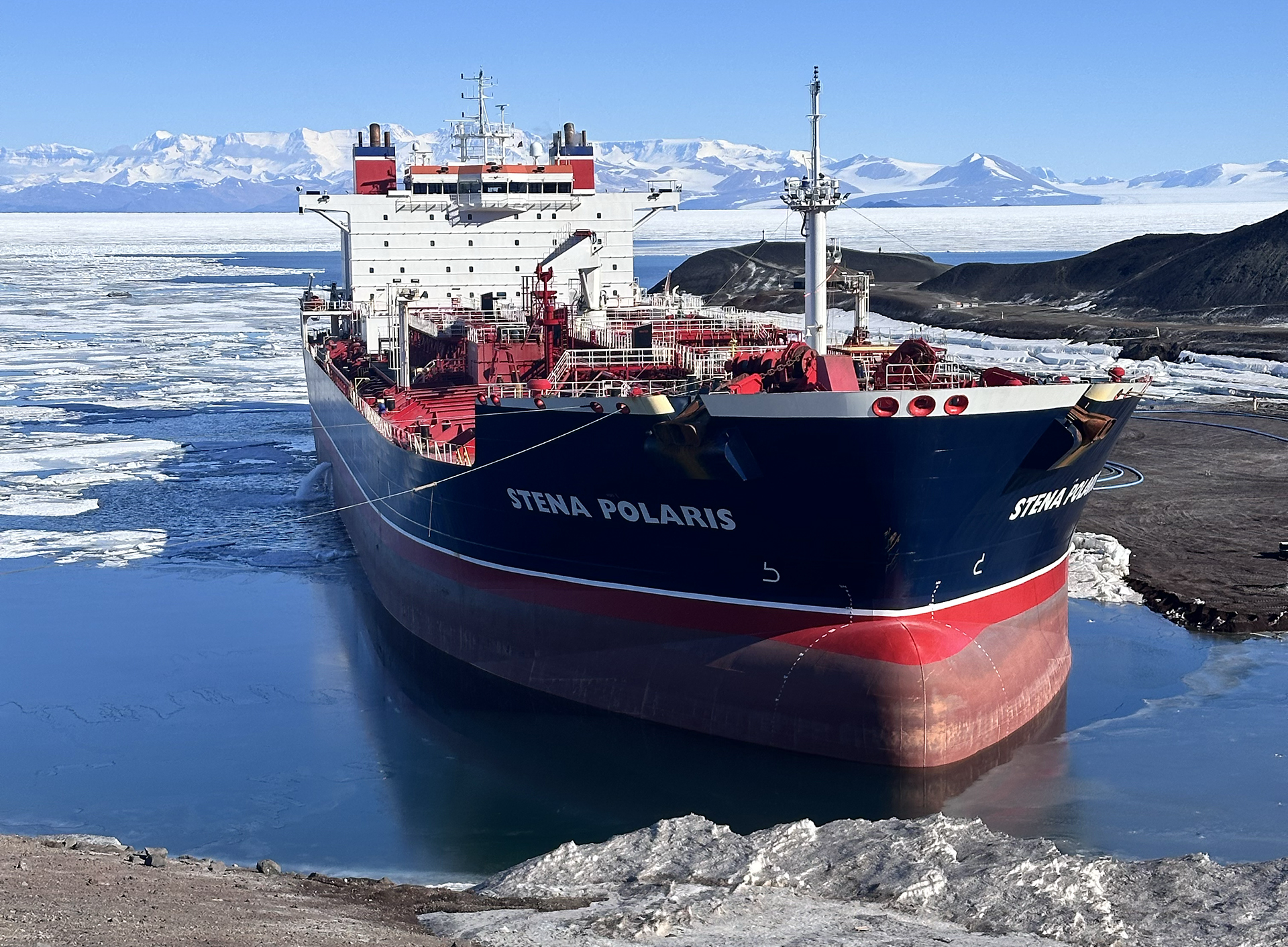
Near the South Pole, Military Sealift Command (MSC) chartered ship MT Stena Polaris (T-AOT 5563) has completed the delivery of fuel to McMurdo Station, Antarctica. The operation is part of MSC’s annual resupply mission in support of Operation Deep Freeze 2026 (ODF), the Joint Task Force Support for Antarctica mission to resupply the remote scientific outpost.
Stena Polaris arrived at the ice-pier at McMurdo Station January 20, following a voyage from Greece, where the fuel cargo was onloaded before Christmas. Working with Navy Cargo Handling Battalion ONE, the ship delivered nearly 5 million gallons of diesel fuel called AN8, a blend mixed specifically for Antarctica; over 400,000 gallons of aviation fuel; and 126,000 gallons of gasoline. The delivery constitutes 100 percent of the fuel supply needed for two years at the remote outpost.
The Stena Polaris is an ice class tanker operated by Crowley Government Services under contract with Military Sealift Command.
American Maritime Officers represents all licensed officers on the tanker. AMO member Captain Carl Schoenbucher was at the helm for the vital mission.
Delivering fuel at the bottom of the Earth, in one of the most austere environments on the planet, isn’t as simple as pumping fuel from the ship to a storage facility, according to Lt. Emily Spath, MSC’s representative at McMurdo Station. Antarctica presents a uniquely challenging setting for fuel delivery. It is one of the coldest places on Earth and also the world’s largest desert. While the fuel transfer process is similar to fuel deliveries conducted at ports around the world, the location, climate, and logistical constraints require additional planning, coordination, and operational considerations rarely encountered elsewhere. Constructed in the 1950s, McMurdo Station has been adapted over time, however, its fuel infrastructure lacks some of the newer technologies commonly found at modern fuel terminals elsewhere in the world. For this reason, pre-planning of the mission is essential for the safety of all those involved as well as for the nearly pristine Antarctic environment.
“Addressing the challenges of fuel delivery in Antarctica begins months in advance through detailed planning and coordination among all involved parties,” said Spath. “The National Science Foundation contracts fuel specialists who operate the terminal at McMurdo Station, the U.S. Coast Guard provides ice escort services for the vessel, and Military Sealift Command coordinates closely with both the ship’s crew and personnel ashore to ensure a safe and successful operation.”