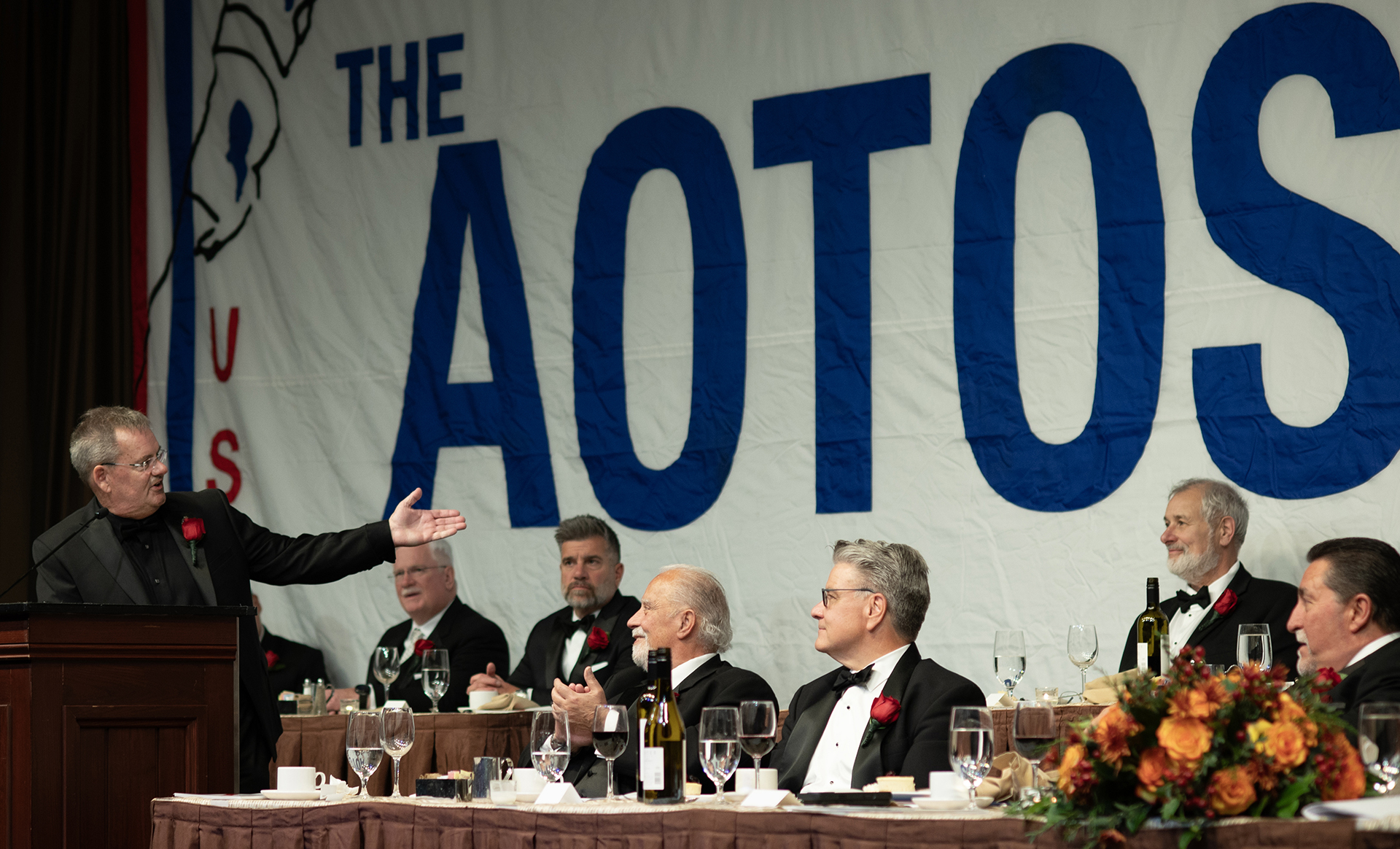
AMO National President Willie Barrere voiced the enthusiasm of maritime labor and industry with the nomination of shipping company executive Stephen Carmel, recent president of U.S. Marine Management, for the post of U.S. Maritime Administrator during the Admiral of the Ocean Sea dinner in October.
The Senate on December 18 confirmed new Maritime Administrator Stephen Carmel to lead the U.S. Maritime Administration, a promising development for American maritime labor and industry, and for advancing the goals of expanding and strengthening the U.S.-flag fleet.
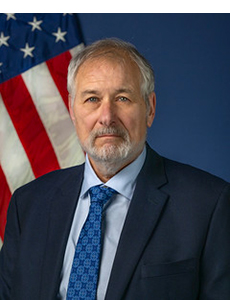
American Maritime Officers and the U.S. maritime community lauded the nomination of Carmel – a shipping company executive, recent president of U.S. Marine Management and a former U.S. Merchant Marine captain – to lead the agency that serves as the intersection of maritime commerce, national security, maritime transportation policy and the advancement of U.S.-flag shipping.
“The confirmation of Steve Carmel is a clear message: maritime expertise matters,” said AMO National President Willie Barrere. “He is the right choice to lead the Maritime Administration, especially in this moment. He brings extensive experience and knowledge as a business leader to the job, and a career as a maritime officer. He knows what it takes to help the U.S. maritime industry grow and succeed.”
During a hearing of the Senate Commerce, Science and Transportation Committee in October, Carmel, a nominee at the time, reiterated his support for the Jones Act and other crucial maritime laws and programs essential to sustaining the current U.S.-flag fleet.
In his opening statement for the hearing October 22, Carmel, who graduated from the U.S. Merchant Marine Academy in 1979, highlighted his experience and perspective gained from a career in the maritime industry.
“I sailed steadily, earned my Master’s license, and commanded ships that traveled to every corner of the world. My time at sea was marked by more highlights than I could recount here, but perhaps the most meaningful was my service in the Arctic – an experience that sparked a lifelong fascination with that region and inspired much of my later academic work,” he said.
“After coming ashore, I held a variety of executive positions with Maersk Line, Limited – the U.S.-flag subsidiary of one of the world’s largest shipping companies – and later became President of U.S. Marine Management, my current position, following our acquisition by Maritime Partners, the leading Jones Act provider of vessel leasing and construction financing,” he said.
In his remarks, Carmel emphasized two lessons learned from his vast experience in the maritime industry. “First, maritime strength depends on people – and it must be built long before a crisis occurs. Second, leadership is about execution, accountability, and partnership,” he said.
“I have been fortunate to work, both at sea and ashore, alongside some of the finest men and women this country has to offer, and I am proud of all that we accomplished together,” he said.
“We are a formidable naval power, but we are not yet a true maritime power. For more than 150 years, we have searched for a maritime policy that works, even as our industrial capacity has steadily declined – both in our ability to carry our own commerce and to build the ships that do it. We have outsourced those capabilities and, with that, much of our independence,” he said.
“A strong maritime sector is not nostalgia – it’s strategy. It means resilient supply chains we control; credible logistics for our joint forces; good jobs across our coasts, rivers, and Great Lakes; and the freedom to move what America needs, when and where America needs it – under our own flag,” he said.
“We have done hard things before. With this Committee’s guidance, and in partnership with labor and industry, we can do them again,” Carmel said. “We will not be the generation that stood on the sidelines and passively watched our noble industry die. We will be the generation that rebuilt it – stronger, smarter, faster, and ready.”