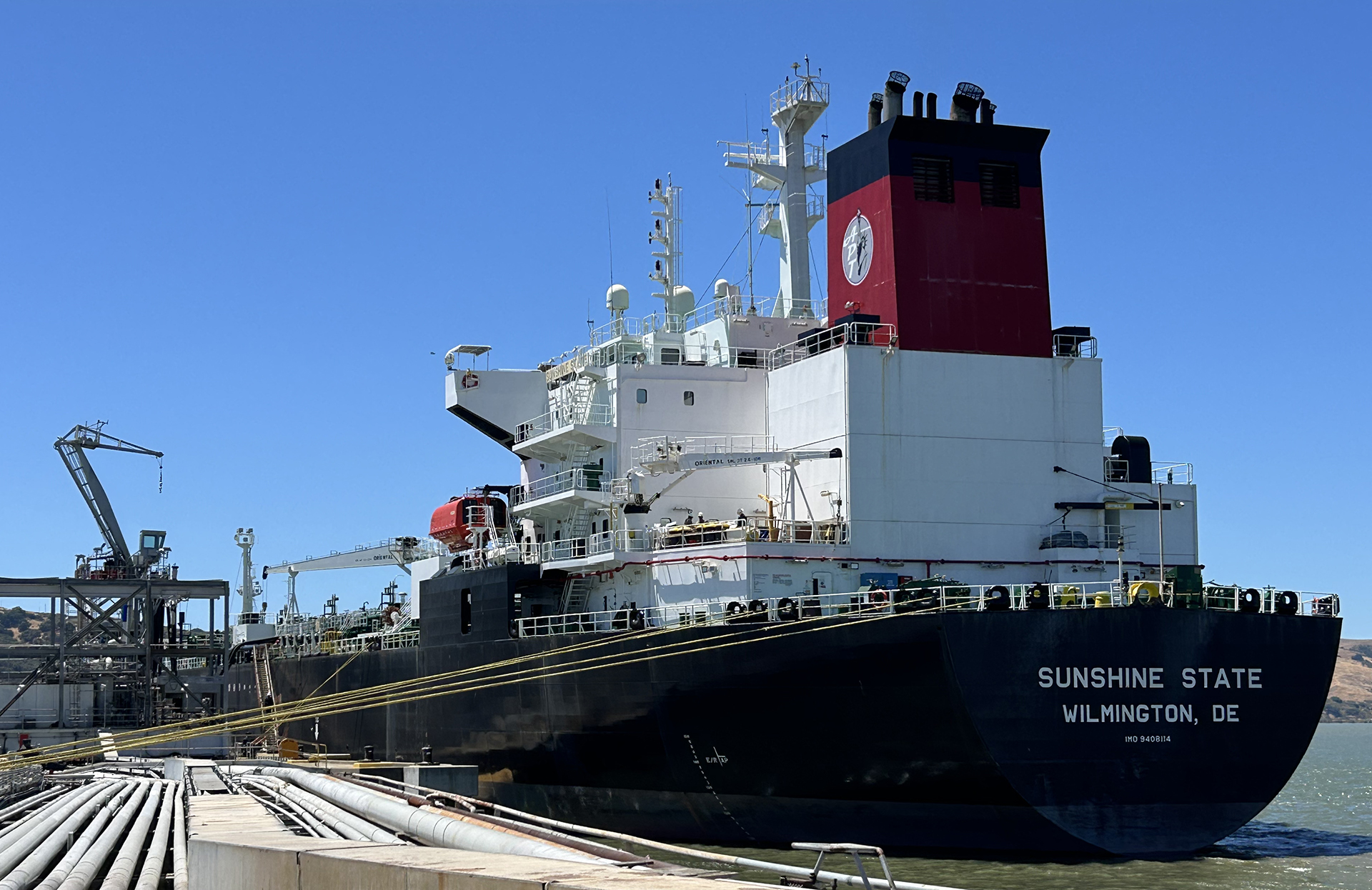
The Sunshine State, operated by Intrepid Personnel & Provisioning for American Petroleum Tankers, was one of several Jones Act tankers delivering much needed fuel products to Oregon during a state of emergency in December.
It’s become a common sight to see fleets of Jones Act tankers coming to deliver life-saving aid after natural disasters hit America’s coastal areas.
But those same American-owned, American-built, American-crewed vessels also respond to other distress calls around the nation.
In November, the governor of Oregon declared a state of emergency after the region’s main source of energy, the Olympic Pipeline in Washington state, was shut down several times due to leaks in its distribution system. The Olympic Pipeline generates approximately 325,000 barrels of refined fuels per day, which account for about 90 percent of Oregon’s gasoline, diesel and jet fuel needs – vital for the cars, trucks and planes in the area.
Although the state had reserves, local government officials were concerned about possible shortages and potential spikes in gasoline costs.
Without delay, Jones Act vessel owners and crews sprang into action, altering delivery routes and bringing much needed fuel products to the Pacific Northwest. The influx of fuel helped avoid disruption for gas stations throughout the state and provided adequate reserves while the pipeline leak was found and repairs made. Several American Maritime Officers-led crews, including the American Petroleum Tankers (APT) vessel Sunshine State, made multiple deliveries, proving the versatility and the ability of the Jones Act fleet to adapt to serve the nation’s needs.
“Not only is the Jones Act vital to national security, but it is critical because we consistently respond when Americans need it most,” said Sunshine State Captain Jonathan Doucot. “Our vessels operate under U.S. regulations, are crewed by U.S. mariners, and are familiar with domestic trade routes, terminals, and regulatory requirements. This allows us to move cargo quickly and safely without delay. Without the Jones Act, the United States would be dependent on foreign vessels and crews to meet the demands of our own domestic commerce.”
The Jones Act, the nation’s cornerstone cargo cabotage law, mandates that goods shipped between U.S. ports be carried on vessels that are U.S.-flagged, U.S.-built and crewed by U.S. citizens. Because of the vigorous defense of the law over the past century, the nation has a fleet of ships at the ready to respond to any type of emergency.

Sunshine State officers Captain Jonathan Doucot (right) and First Assistant Engineer Bill Sharp, here attending meetings of the AMO Executive Board in January, were among the AMO officers leading the response of the Jones Act tanker fleet to fuel shortages in Oregon late last year.
The Sunshine State, which normally delivers fuel along the West Coast, primarily from Cherry Point, Wash. to San Francisco, Calif., joined AMO-crewed APT tankers, such as American Freedom and American Endurance, Fairwater tankers Louisiana and Ohio, as well as other non-AMO Jones Act vessels, to provide consistent and reliable fuel deliveries as repairs were made to the vital pipeline.
In September, the Olympic Pipeline had also experienced a brief ten-day outage. During that period, the Sunshine State made five trips to Portland, Ore. The pipeline returned to service, but in November it went down again, causing multiple scheduled Jones Act deliveries to Portland.
The state of emergency declaration lasted about three weeks and spanned the busy Thanksgiving holiday, but residents in the region hardly felt the fuel pinch because of the efforts of the U.S. Merchant Marine.