By Pete Kinsey
AMO Great Lakes Representative
Although the final transits through the Soo Locks on January 15 signaled the end of commercial traffic, winter was not yet finished with Great Lakes shipping. Thickening ice continued to challenge vessels still enroute to their layup docks.
This served as a clear reminder that strong Coast Guard icebreaking support remains essential. In the season’s closing days, U.S. Coast Guard icebreakers Mackinaw and Neah Bay stepped in to escort AMO-contracted ships Wilfred Sykes and American Spirit safely to winter berths.
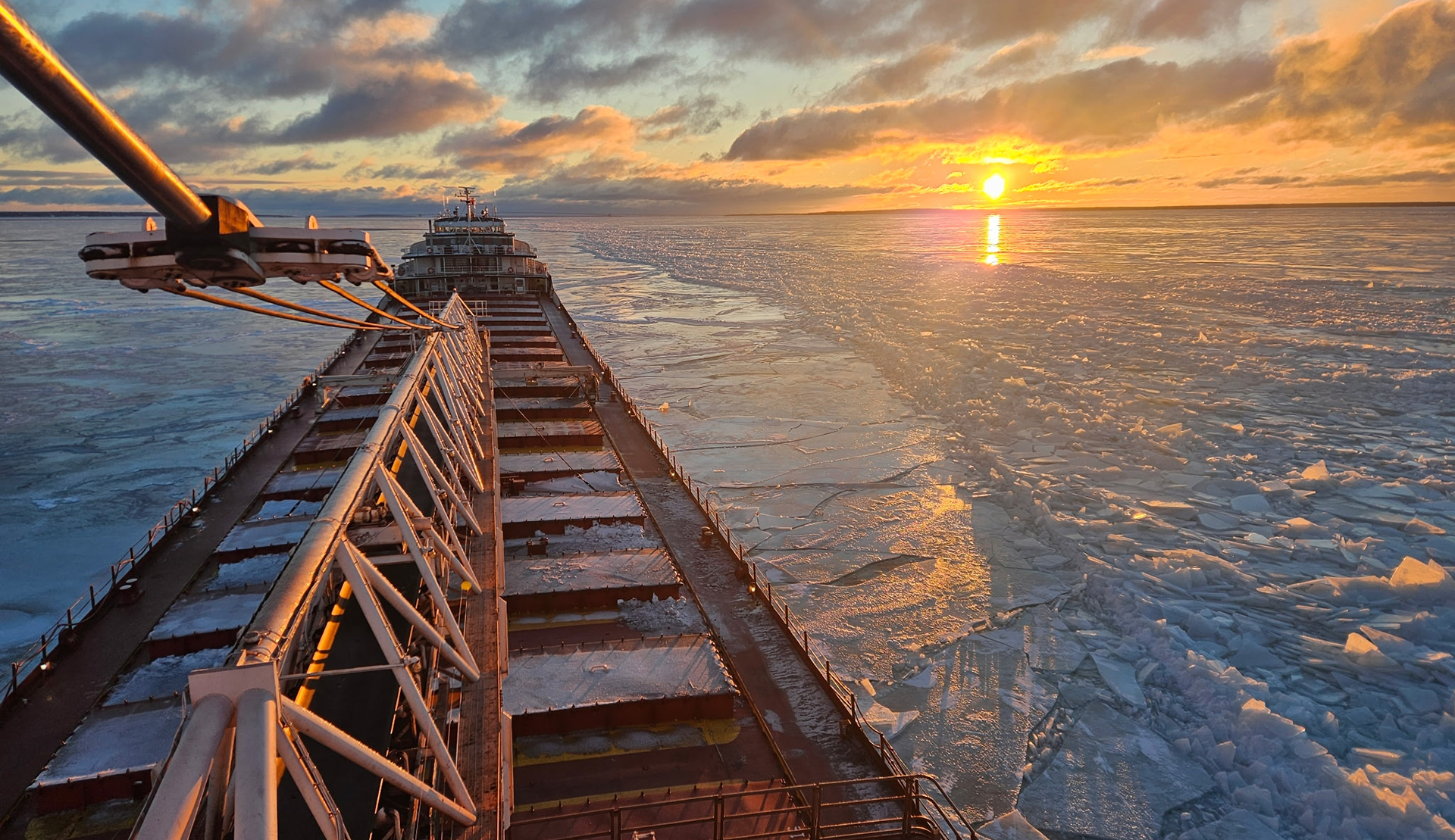
The Wilfred Sykes navigates the Straits of Mackinac in January. Photos by Sean Erhardt
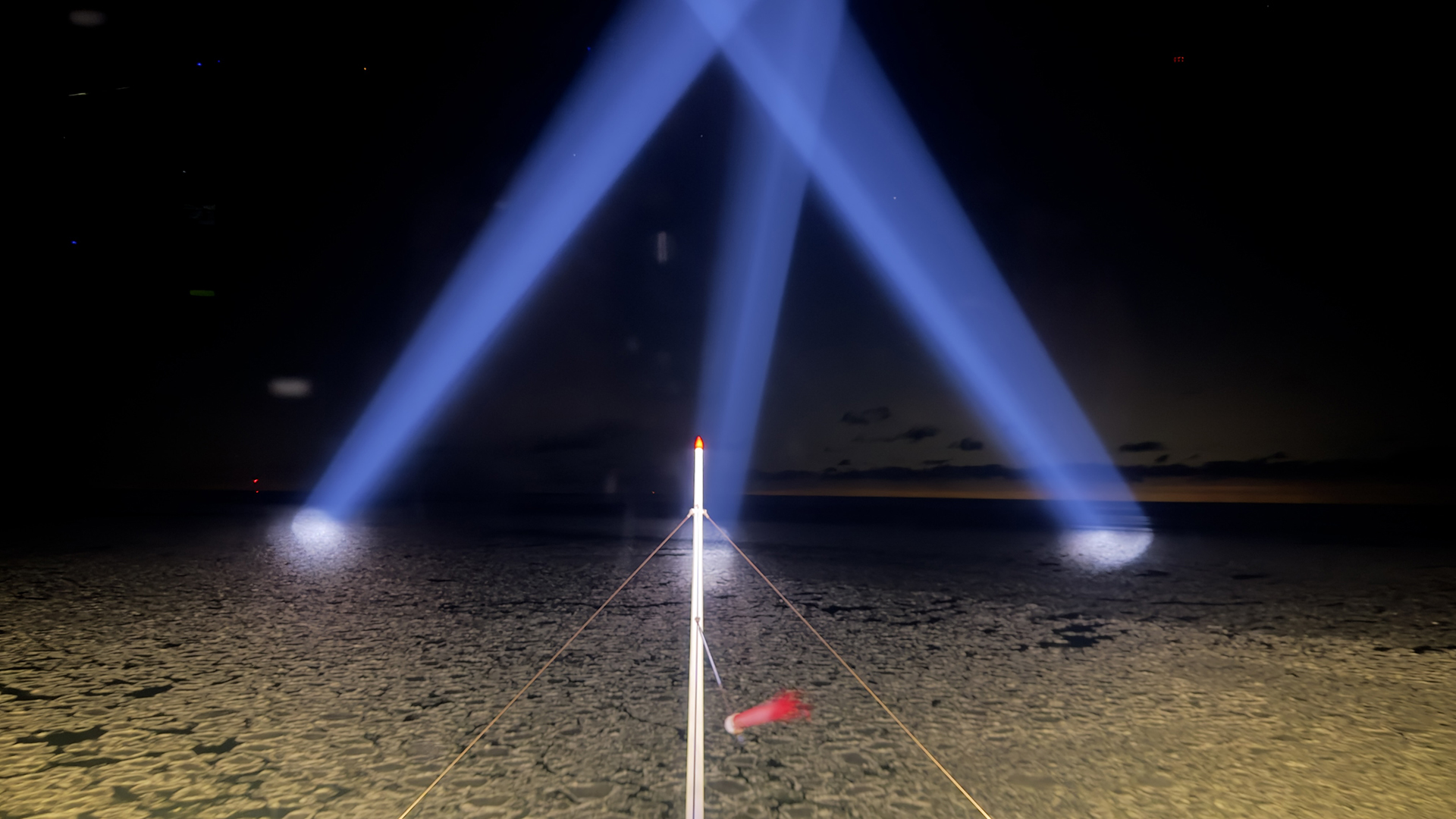
The Wilfred Sykes, a 661-foot freighter built in 1950, became stuck in heavy ice 1.2 miles past Round Island Light. On January 21, the Mackinaw was dispatched to free her. Captain Michael Grzesiek, who commanded the Sykes, said: “With the Mac ahead of us it was good sailing.”
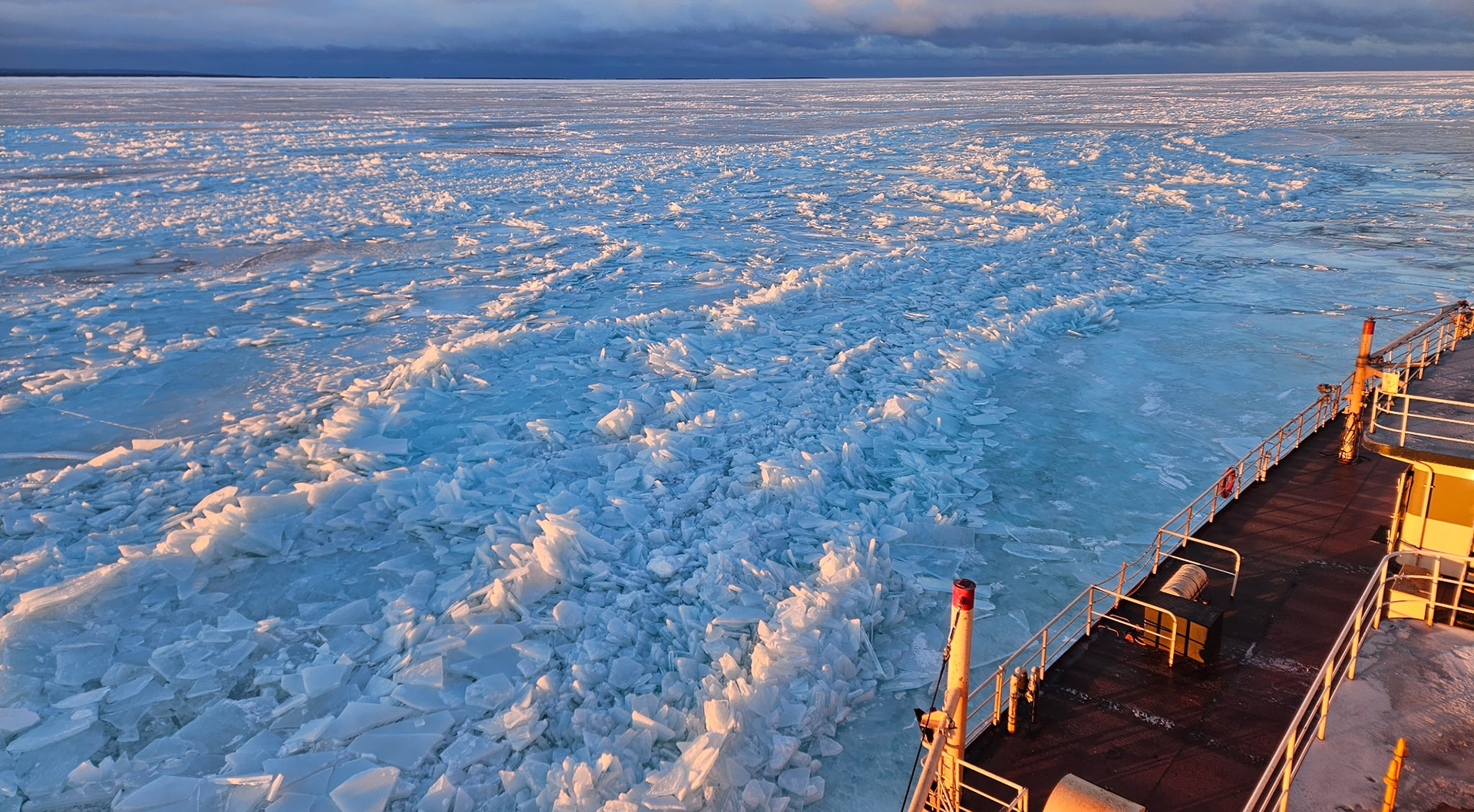
The Mackinaw led the Sykes safely through the Straits of Mackinac. The journey had been grueling. What normally takes three days extended to six days due to the conditions. Captain Grzesiek praised the Coast Guard for their good work in getting the vessel clear.
Third Mate Christian Leathers reflected on the experience. “I didn’t intend to be on the last boat to layup in the most frigid conditions, but the work went smoothly, we had a good crew,” he said.
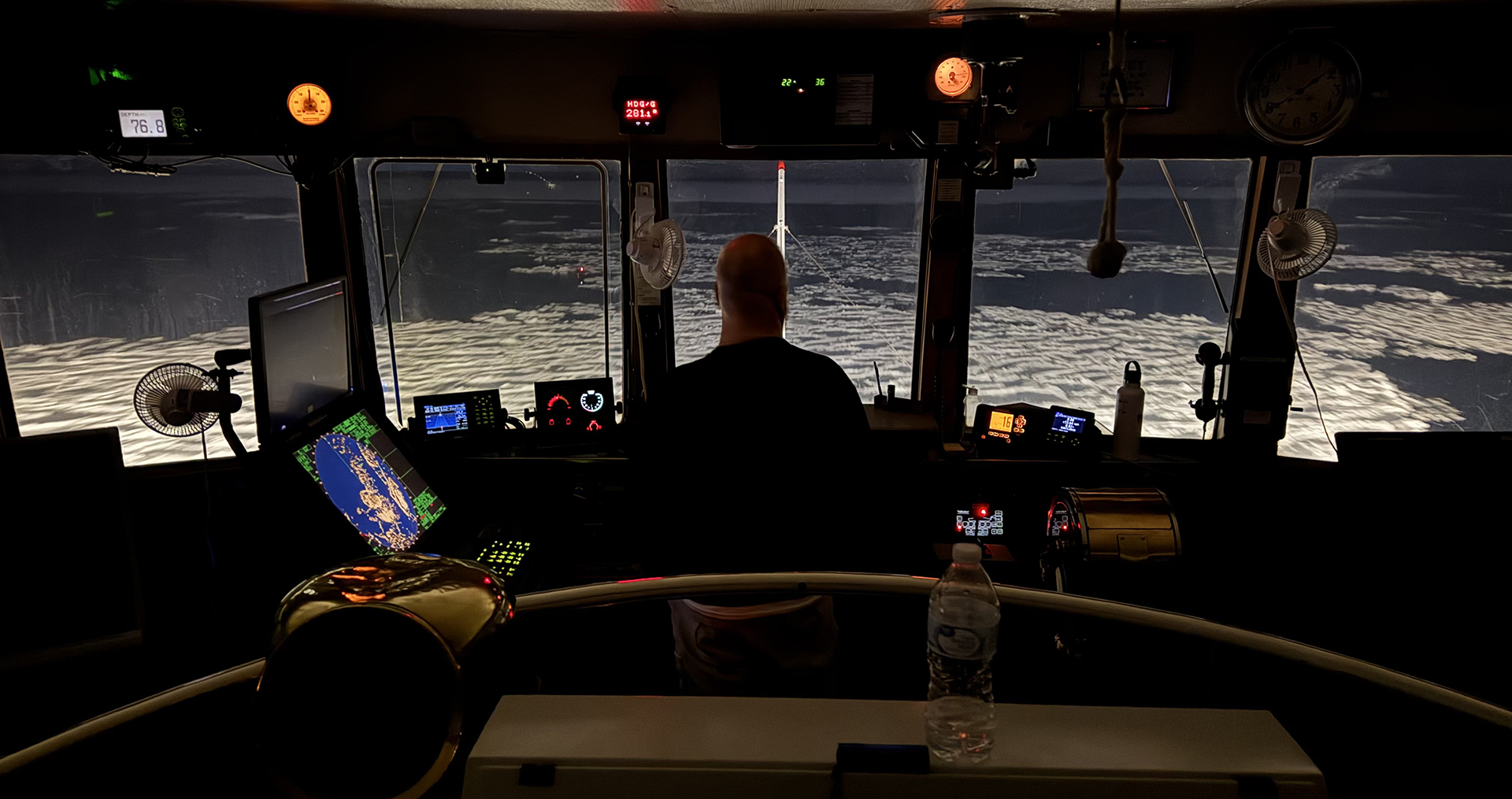
Second Mate Sean Erhardt piloting through the ice in the Straits of Mackinac
Second Mate Sean Erhardt described the ordeal starting in the Rouge River with a 30-hour load in bitter cold. After the load and underway, the Coast Guard helped free the Sykes, allowing it to reach Burns Harbor to unload before heading to Milwaukee. The Sykes arrived in Milwaukee Harbor around 0800 on January 24. The Sykes is now laid up there beside the Joseph L. Block, another vessel operated by Central Marine Logistics.
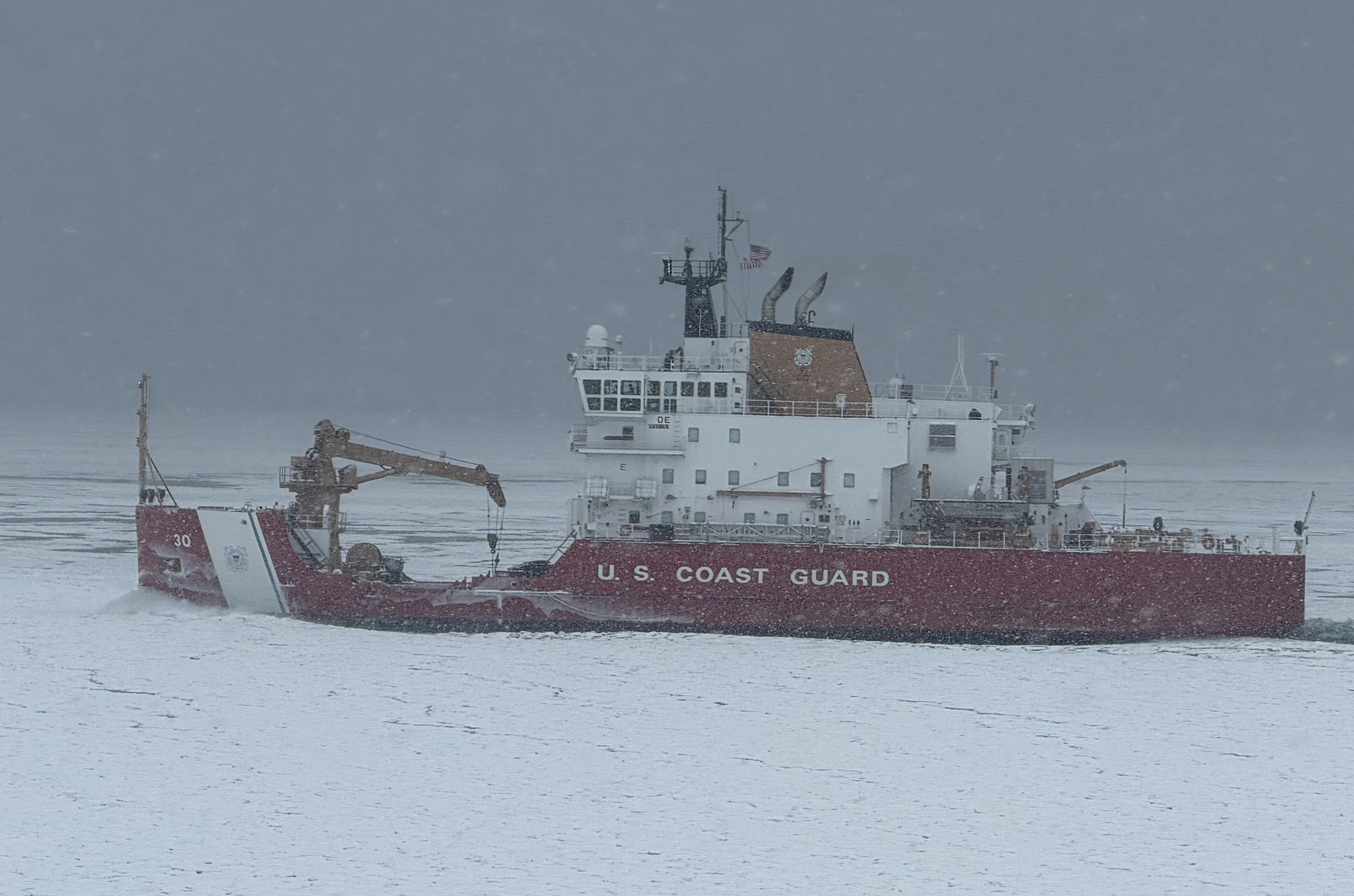
The U.S. Coast Guard Cutter Mackinaw seen from the Sykes
The American Spirit, a 1,004-foot freighter built in 1978, faced challenging ice conditions after clearing the Soo Locks. Captain Justin VonSprecken noted the vessel passed SE Shoal Light at 1135 on January 20 and Pelee Light at 1210. As soon as the Spirit passed Pelee Light, the ice was thick. By 1810, the ship had covered only three miles. Captain VonSprecken recalled the temperature as two degrees on the west end of Lake Erie and the ice was building fast.
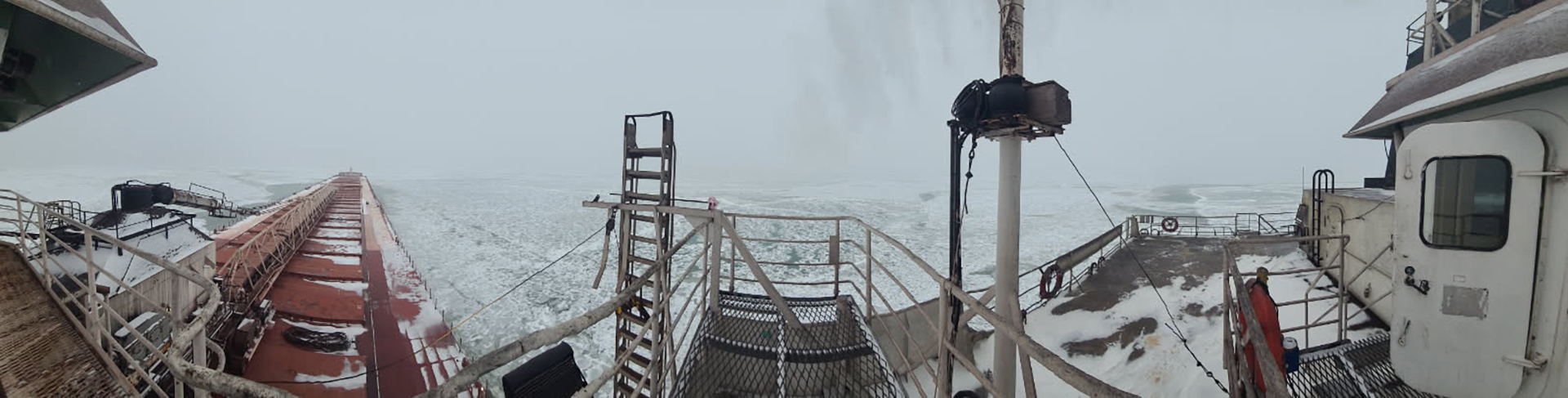
At the time the Spirit passed Pelee Light, USCG icebreaking assets were assigned elsewhere and did not arrive on scene until 0935 January 21. Upon arrival, the Neah Bay broke trail for the Spirit and the ship made slow headway. Progress improved by midday, and the Neah Bay escorted the Spirit to Toledo.
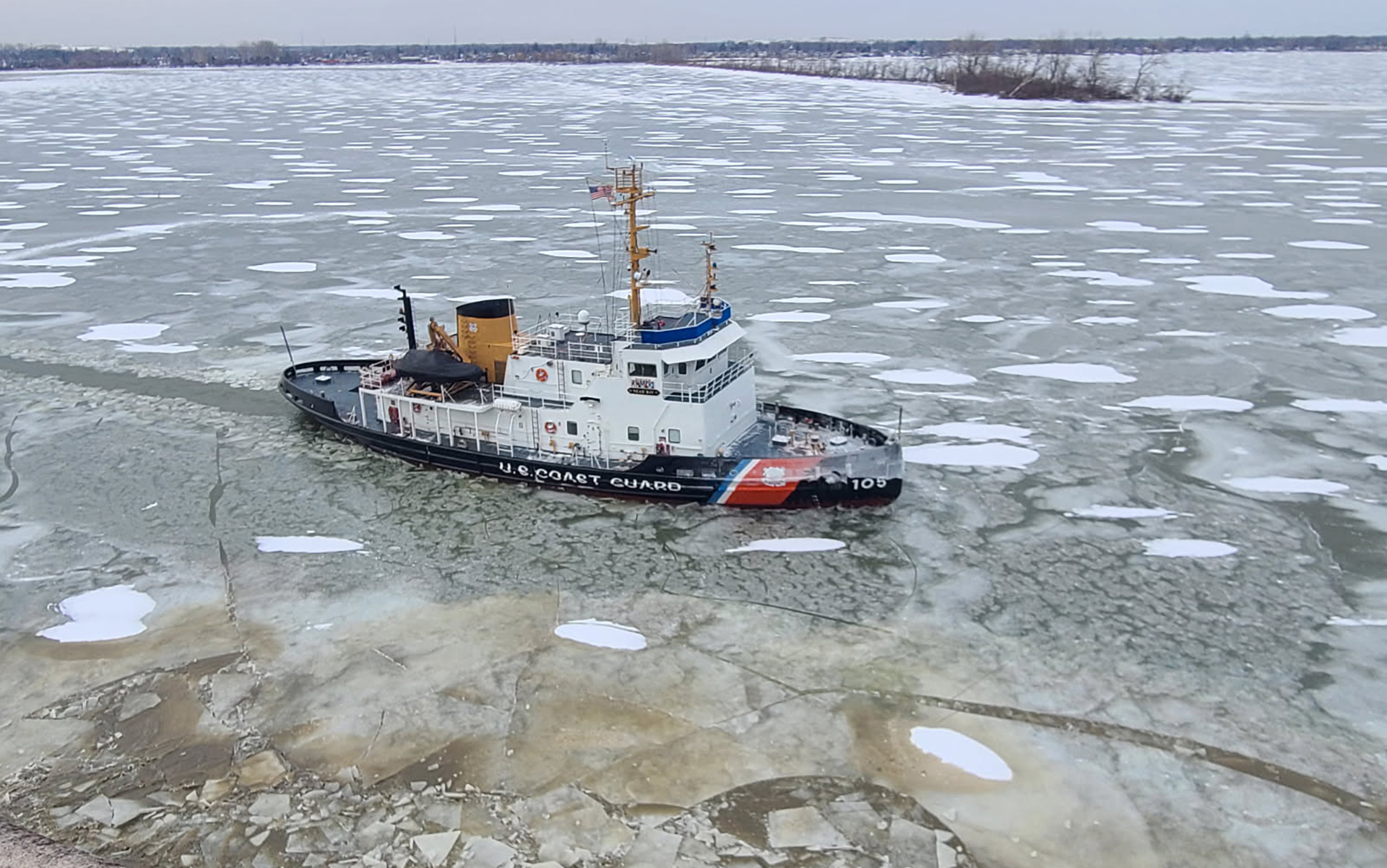
USCGC Neah Bay on Lake Erie as seen from the American Spirit. Photos by Captain Justin VonSprecken
WTOL News 11 reported ice coverage formed quickly and stood above average for the date. NOAA data showed Lake Erie was nearly 80 percent covered by January 20.
The Wilfred Sykes and American Spirit stood as symbols of mariners and the Coast Guard working together to finish strong. Adequate resources for the U.S. Coast Guard remain critical. Proper funding and icebreaking assets keep vital commerce moving (especially the Great Lakes steel trade that underpins U.S. manufacturing, infrastructure, and jobs), even in the hardest months.