The following is excerpted from a maritime advisory issued by the United States Maritime Administration on June 18. Click here to read the full advisory.
2025-014-Gulf of Guinea-Piracy/Armed Robbery/Kidnapping for Ransom
Description:
This revised advisory cancels U.S. Maritime Advisory 2024-014
1. Reference: None.
2. Issue: Piracy, Armed Robbery, and Kidnapping for Ransom (KFR) continue to pose significant threats to vessels and crews operating in the Gulf of Guinea (GoG) as well as to mariners onboard a vessel, or transiting to or from a vessel, in the GoG.
3. Guidance: Over the last several years, pirates, armed robbers, and KFR groups are known to have operated off Nigeria, Benin, Cameroon, Cote d’Ivoire, Equatorial Guinea, Gabon, Ghana, Sao Tome and Principe, and Togo. These groups have fired on vessels during boardings and attempted boardings. KFR groups generally kidnap senior crew members, such as the master and chief engineer, and any Western or foreign crew members. Kidnapped crew members are normally taken ashore in the Niger Delta region where KFR groups demand ransom payments in exchange for the safe return of the crew members. Details of incidents in the GoG can be found in the Office of Naval Intelligence Worldwide Threat to Shipping reports, posted at https://www.oni.navy.mil/ONI-Reports/Shipping-Threat-Reports/Worldwide-Threat-to-Shipping/.
There have been a lot of conversations here, there, and everywhere over the past month about what we are working on and what it will mean for the AMO membership. Every once in a while, the stars align and things advance to a point where details are available and can be discussed.
American Maritime Officers has signed an MOU with Osprey Ship Management to represent the licensed officers on the soon-to-be-reflagged CMA CGM Phoenix. Many of our members have sailed under AMO contract with Osprey in the past.
Although the current MOU is for one vessel, CMA CGM intends to bring as many as 20 vessels into the U.S. registry over the next two-plus years with Osprey as the U.S.-flag vessel operator, all under contract with AMO.
In a similar timeframe, we are expecting several other vessels to enter the AMO fleet through the expansion of AMO-contracted companies, as well as new work in other sectors with companies that are new to us. For the latter, there are NDAs in place and hopefully the stars will continue their alignment and we’ll be able to provide more details in the near future.
With the expansion of the U.S.-flag fleet just getting underway, AMO and MEBA met yesterday and signed a new passthrough agreement that builds upon our existing arrangement. We believe our continued cooperation will put each of our separate unions in an excellent position to provide the officers for the incoming vessels.
A joint letter from MEBA President Adam Vokac and myself follows this announcement. Details of our new passthrough agreement will be presented at the July AMO membership meeting.
In the meantime, AMO and MEBA continue working together under our existing passthrough agreement, which remains very successful. We’ve had numerous senior deck officer billets come to our job board from MEBA, and many of our engineer billets go to theirs. The AMO membership, the U.S. Merchant Marine, and our operating companies are all best served when our officers fill these jobs cooperatively to keep the ships moving.
This is an exciting time as the U.S. Merchant Marine is getting long-overdue attention at the highest levels of the U.S. government and we expect expansion of the U.S.-flag fleet to continue.
Willie Barrere
AMO National President
To the Memberships of AMO and MEBA
As many of you know, with the SHIPS for America Act, numerous Executive Orders, and foreign investment interest due to the Trump Administration’s focus on rebuilding and revitalizing the US Maritime Industry, our unions play an important role in developing how far the future of US flagged shipping can go and how great it can become.
Over the last year and a half, there have been numerous meetings across the country and in DC strategizing the new National Maritime Policy; one common refrain heard from companies and stakeholders is regarding Labor – are there enough mariners to match the aspirations? The SHIPS Act includes incentives throughout all aspects of the bill – for shipbuilding, cargo carriage, and mariners. The USCG is reworking requirements for licensing and upgrading. However, as our Unions have seen since the pandemic, it is the Unions that have picked up the ball and led the charge through improved contracts that make going to sea a desirable career. There is certainly more work to do, but the interunion collaboration has ended the race to the bottom, and allowed us both to achieve improved working conditions and wages for our mariners that more accurately reflect the skills required, hardships, and dangers of sailing.
AMO and MEBA wish to continue the successful partnership. We have worked out a set of pass-through parameters to facilitate an increase in US flagged vessels with the introduction of the CMA CGM fleet under Osprey Ship Management, an AMO employer. The memberships will hear more about this from their respective Unions shortly. The expectation is that there will be many more ships coming in to the US registry soon, whether it be for assisting MSC, the TSP program, foreign investment, LNG export vessels, or simply increases to our current employer fleets. A national goal of 250 ships in 10 years is only achievable if we work together (we now collectively have 85 trading internationally). Not only will we need to rely on each other’s mariners to help move the ships of today, we will most certainly need to work with each other to ensure mariner compensation and working conditions are good enough to recruit and retain the mariners of tomorrow into this industry.
For nearly two years, MEBA and AMO have been working together with a very successful pass-through arrangement with approximately 100 mariners working via this procedure. It is an initiative some would have thought impossible just a few years ago. This has allowed our vessels to continue operating, and our employers to make investments into expansion knowing they can plan on their vessels moving. It has also allowed trust to develop between the union officials operating the program, and the mariners working side by side on the deck plates. As more ships come in, there will be even more need to collaborate. If our industry is going to grow and fulfill our Nation’s maritime and national security needs, we need to work together to keep our vessels moving. If our mariners are to earn the wages you deserve and work in conditions fitting for US maritime officers, then we cannot work at cross purposes. The success of this venture will rely heavily on the cooperation of our members and both presidents agree this is the best path forward – both for our nation, and for our members and their families.
Thank you,
Adam and Willie

American Maritime Officers have initiated operation of the first Jones Act compliant cable-laying barge, bringing new job opportunities to our seafarers.
The barge is completing preparations for service in July off the coast of New York supporting an offshore wind installation after supply loading is complete. The barge will play a vital role in offshore energy projects and available for use in other applications and sectors that need industrial cable in near shore environments.
The new 300-foot by 100-foot barge, which is self-propelled and has dynamic positioning capabilities, further solidifies AMO’s involvement within the emerging offshore wind market. AMO members have access to pivotal dynamic positioning training at STAR Center.
“Operating unique vessels is nothing new to AMO and with the Crowley/Nexans cable barge, our officers look forward to providing an important new capability for the U.S. maritime industry,” said AMO National President Willie Barrere. “With the support of our commercial partners, this vessel is another step in increasing the much-needed maritime workforce.”
AMO members have been assisting with getting the barge prepared for its mission since last year. Approximately 16 AMO members will crew the vessel per shift, working two shifts per day.
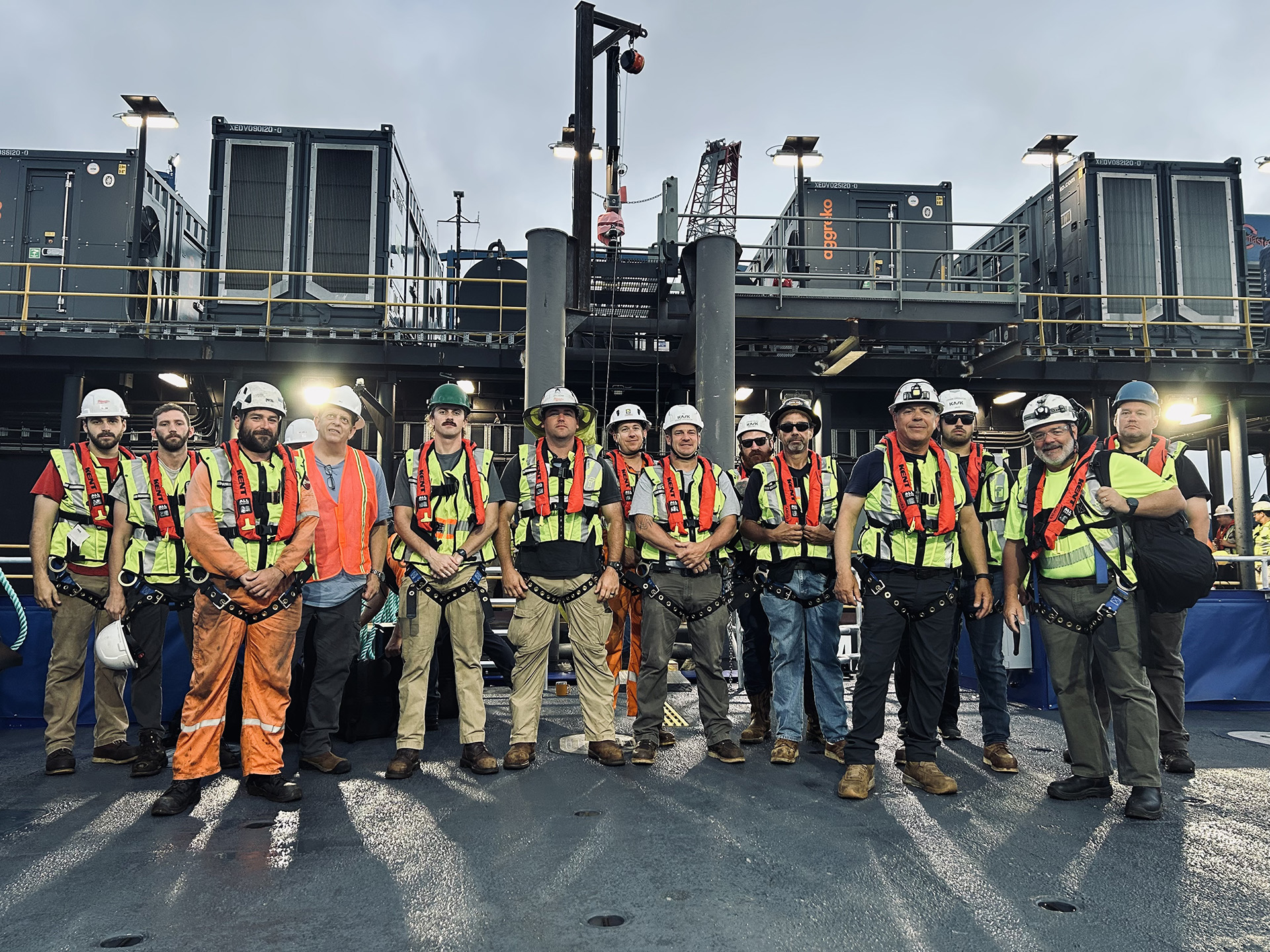
American Maritime Officers members aboard the Crowley cable-laying barge, here in Charleston in May included Captain Francisco Souza, Captain John Mansfield, Captain John Conway, Captain Dan Keneally, Chief Engineer Ross Hilligoss, Chief Engineer Dan Beard, Chief Mate Brian Enos, Chief Mate Grayson Conner, First Assistant Engineer Adam Poliquin and First A.E. Chris Falla.

The cable laying barge has completed sea trials and will be used to assist wind farm projects.
The following press release was issued on June 12 by the United States Maritime Administration.
WASHINGTON – The U.S. Department of Transportation announced Sang H. Yi as Acting Maritime Administrator (MARAD). As acting head of MARAD, Yi will play a critical role in advancing the Trump Administration’s domestic shipbuilding goals and restoring the nation’s maritime dominance, as outlined in President Trump’s April Executive Order.
Acting Administrator Yi will lead MARAD’s efforts to maintain and modernize the vital infrastructure that supports both commercial shipping and military sealift operations. He will also guide the Department’s initiatives to strengthen the maritime workforce, foster innovation and expand cross-industry collaboration to build a more robust and prepared maritime transportation system.
“It’s an honor to serve my country and be a driving force behind a renewed era of U.S. Maritime strength on the global stage,” said Acting Administrator of the Maritime Administration Sang Yi. “The Merchant Marine plays a vital role in supporting our national security and economic growth, and our industry partnerships will help us secure a resilient and strong maritime future.”
Before joining MARAD, Acting Administrator Yi spent nearly 15 years leading congressional oversight and investigations for three committees in the U.S. House of Representatives. Prior to his congressional career, he served in the intelligence community. He is a graduate of the U.S. Merchant Marine Academy, where he received his commission as an officer in the Navy Reserve and a Third Mate Unlimited license. Yi holds an M.A. in National Security and Strategic Studies from the U.S. Naval War College, and a J.D. from the George Washington University Law School.
 American Maritime Officers Services lobbyist Brenda Otterson congratulates Congressman Salud Carbajal and Congressman Mike Ezell for their efforts pushing more cargo for the U.S. Flag fleet. With them is M.E.B. A. Secretary-Treasurer Roland Rexha and Government Affairs Director Erick Siahaan.
The United States House of Representatives recently overwhelming passed a series of bills that continued the Trump administration’s goal of bolstering the U.S. flag fleet – most notably by increasing cargo preference for Department of Transportation cargoes to 100 percent.
By a vote of 373 – 14 on June 9, legislators approved H.R. 2035, the American Cargo for American Ships Act, a bipartisan legislation to increase the U.S.-flag cargo preference shipping requirement to 100 percent for all cargoes procured, furnished or financed by the Department of Transportation. The bill was sponsored by Congressman Salud Carbajal (D-CA), Ranking Member of the Coast Guard and Maritime Transportation Subcommittee and co-sponsored by the Subcommittee’s Chairman, Congressman Mike Ezell (R-MS).
Current federal law caps the amount of government-impelled cargo moved on U.S. flag vessels at 50 percent in most cases. Doubling that amount could provide the much-needed cargo to support an increased U.S. flag fleet.
“American cargo transported on American ships strengthens our economy, creates jobs, and protects our supply chains from external threats,” Carbajal said. “My bipartisan bill will strengthen the U.S. shipping fleet by ensuring that taxpayer-funded cargo is moved on U.S.-flagged ships. I’ll continue working across the aisle to get this bill across the finish line and signed into law.”
The cargo preference change now must be approved by the U.S. Senate before it can be signed into law. Since President Trump has been in office, he has signed an executive order calling for the increase of shipbuilding in the United States and has made it a mandate to decrease the nation’s dependency on foreign influence in the supply chain. Other congressional leaders have also pushed initiatives to bolster the domestic maritime industry and the U.S. Merchant Marine through proposed bills such as the SHIPS for America Act, which among other things would incentivize the use of American ships.
“This is a major victory for American workers, our national security, and our economy,” Ezell said. “The American Cargo for American Ships Act strengthens our maritime capabilities and ensures we’re not dependent on foreign vessels to move U.S. goods, especially during times of crisis. A strong U.S.-flagged fleet means a more secure and self-reliant America. I’m proud to see this bill, which keeps American cargo on American ships, restores fairness to our system, and gives our mariners a fighting chance against heavily subsidized foreign competitors, pass the House. I urge my colleagues in the Senate to act swiftly and send it to the President’s desk.”
The American Cargo for American Ships Act is supported by: American Maritime Congress, American Maritime Officers, American Maritime Officers Service, American Roll-on Roll-off, International Organization of Masters, Mates & Pilots, Marine Engineers’ Beneficial Association, Maritime Institute for Research and Industrial Development, Sailors Union of the Pacific, Seafarers International Union, Transportation Institute, U.S. Ocean, Waterman Logistics, Hapag Lloyd USA, and American President Lines LLC.
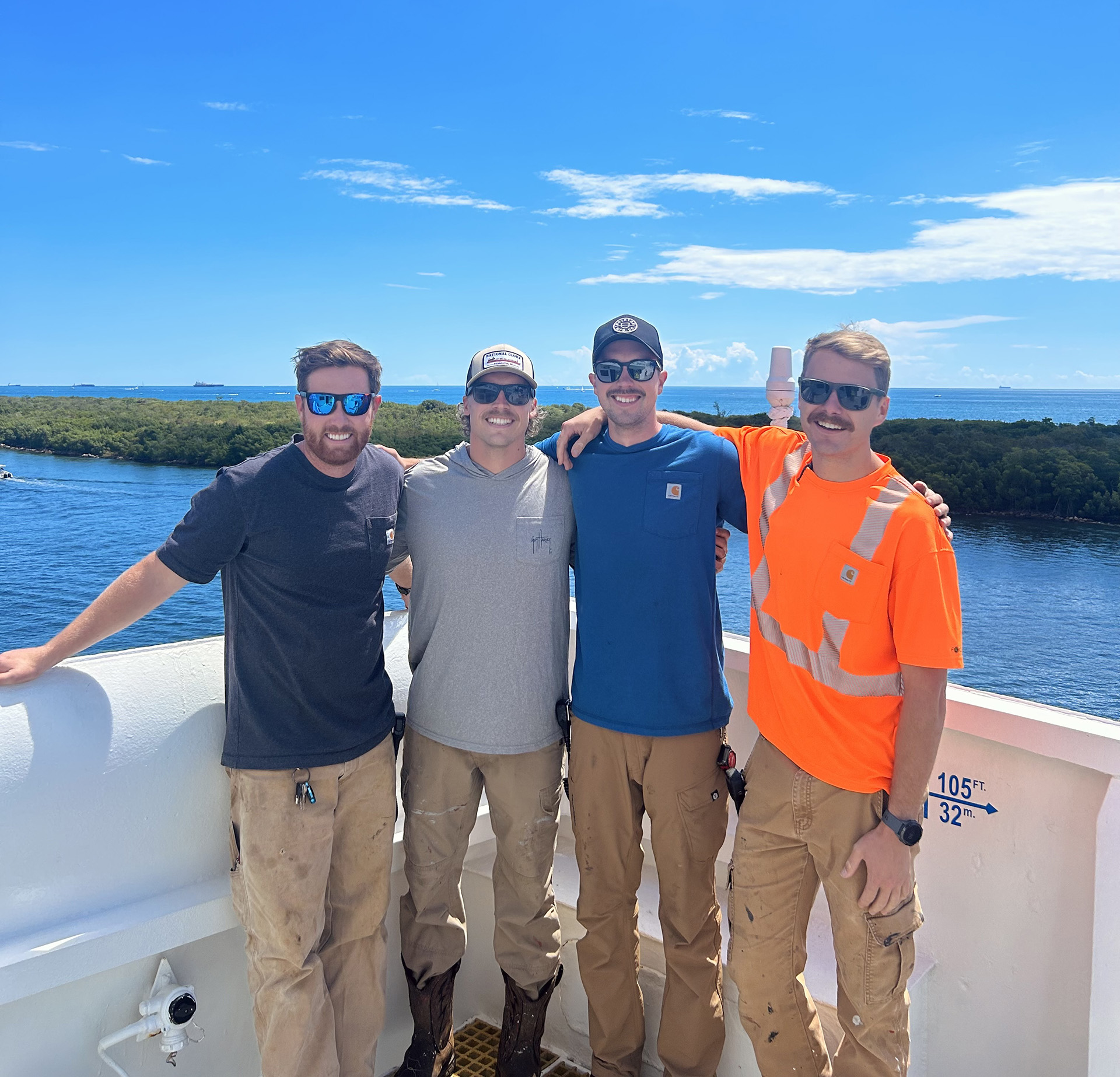
American Maritime Officers members working aboard the M/V National Glory, here in Port Everglades, Fla., included Chief Mate Peter Carnazza, Second Mate Dane Krantz, Third Mate Steve McCombs and Second Mate Jake Barton.
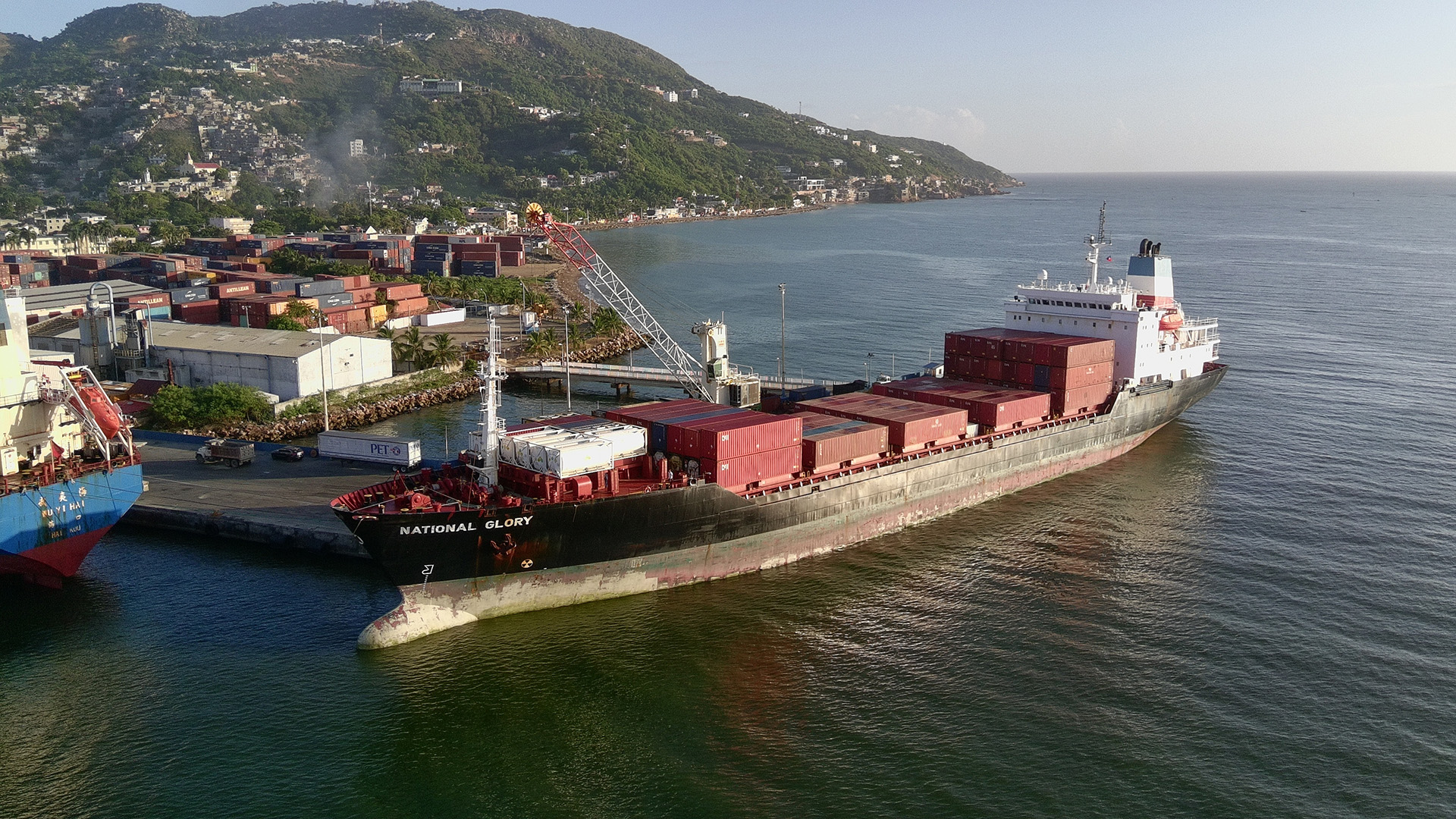
The National Glory, here in Haiti, is operated by the Pasha Hawaii Holdings and delivers goods to Puerto Rico and other Caribbean destinations from the mainland. The Jones Act containership is manned in all licensed positions by AMO.
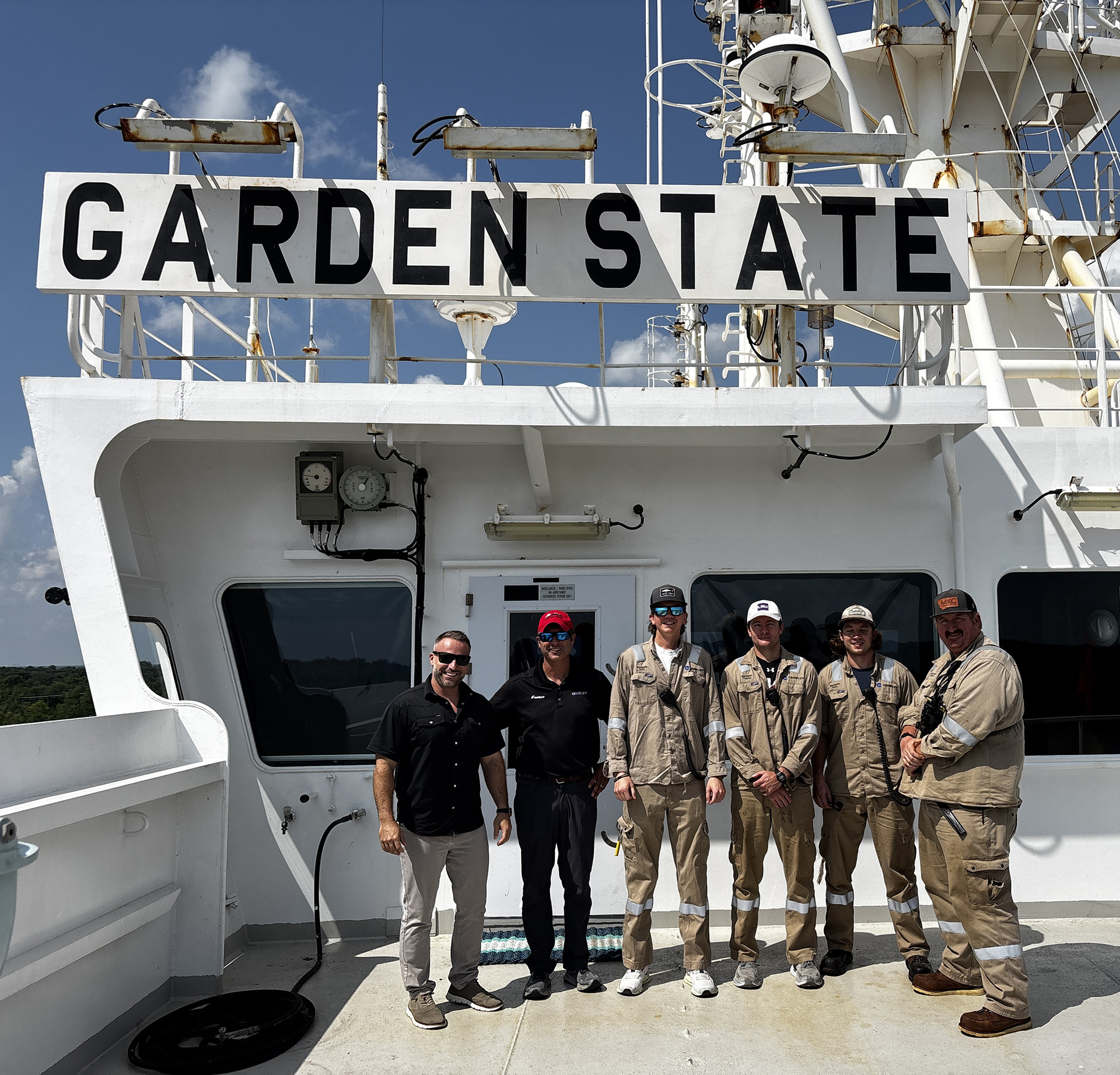
American Maritime Officers working on the tanker Garden State in May included several graduates of the State University of New York Maritime College (SUNY). Deck officers seen here included Captain Christopher Menezes (Class of ’02), Third Mate Keegan Byrd (2023), Third Mate Tayler Trapani (2020), Second Mate Nicholas Panor (2018) and Chief Mate Shamus McDaniel (2016). With them is pilot Captain Chris Smith, who also graduated from SUNY in 2006.

The Garden State, seen here crossing paths with the APT tanker American Pride in New Orleans, is operated by Intrepid Personnel Services for APT tankers and is manned in all licensed positions by AMO.


SUNY Maritime Alumni aboard M/T Sunshine State in May included Third Mate Ethan Kaiser, Third Mate Michael Morton, PIC Observer Sean Corrigan, Chief Engineer Rohan Samuels, and Third Assistant Engineer Stephen Buchheit.
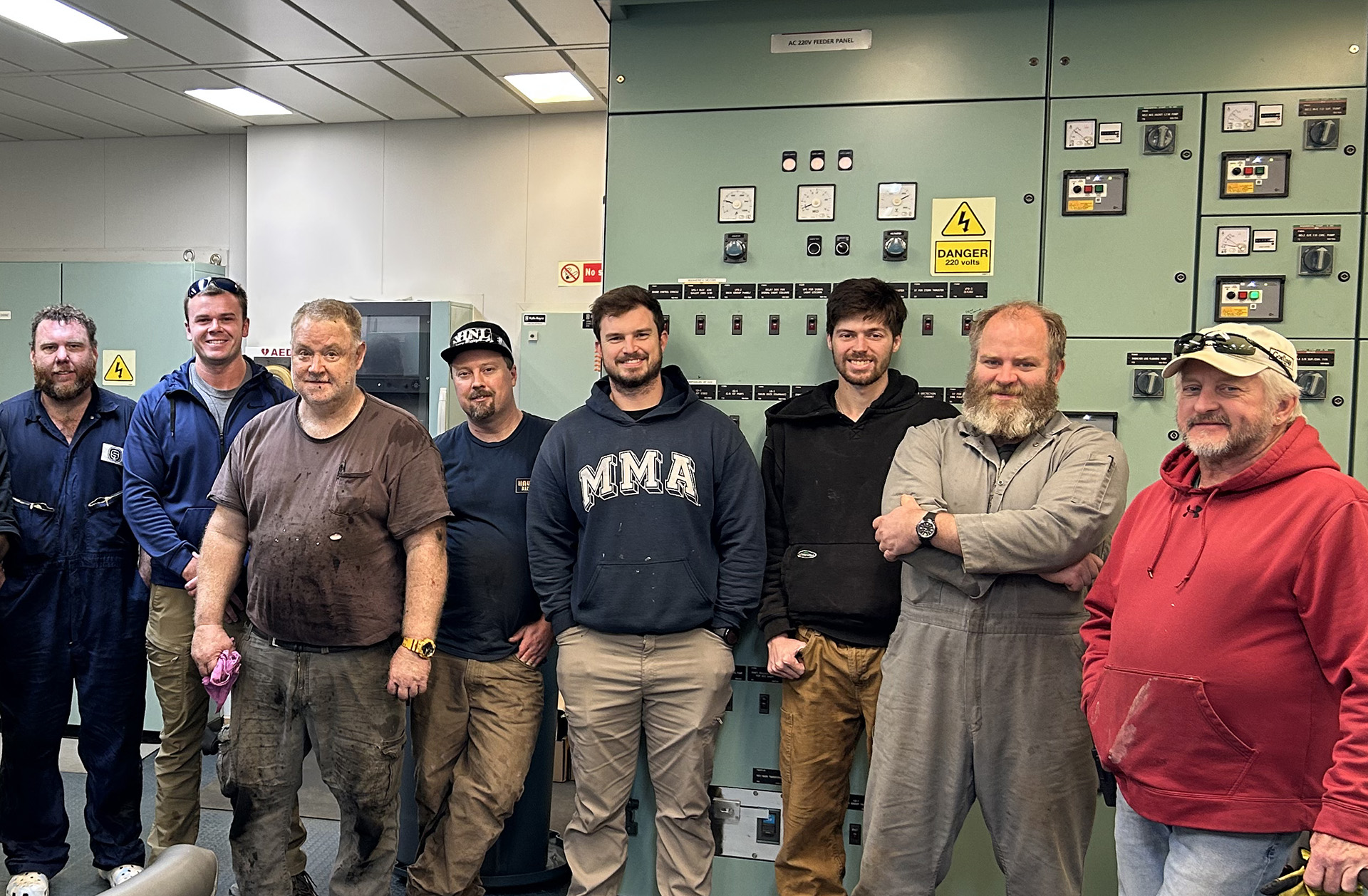
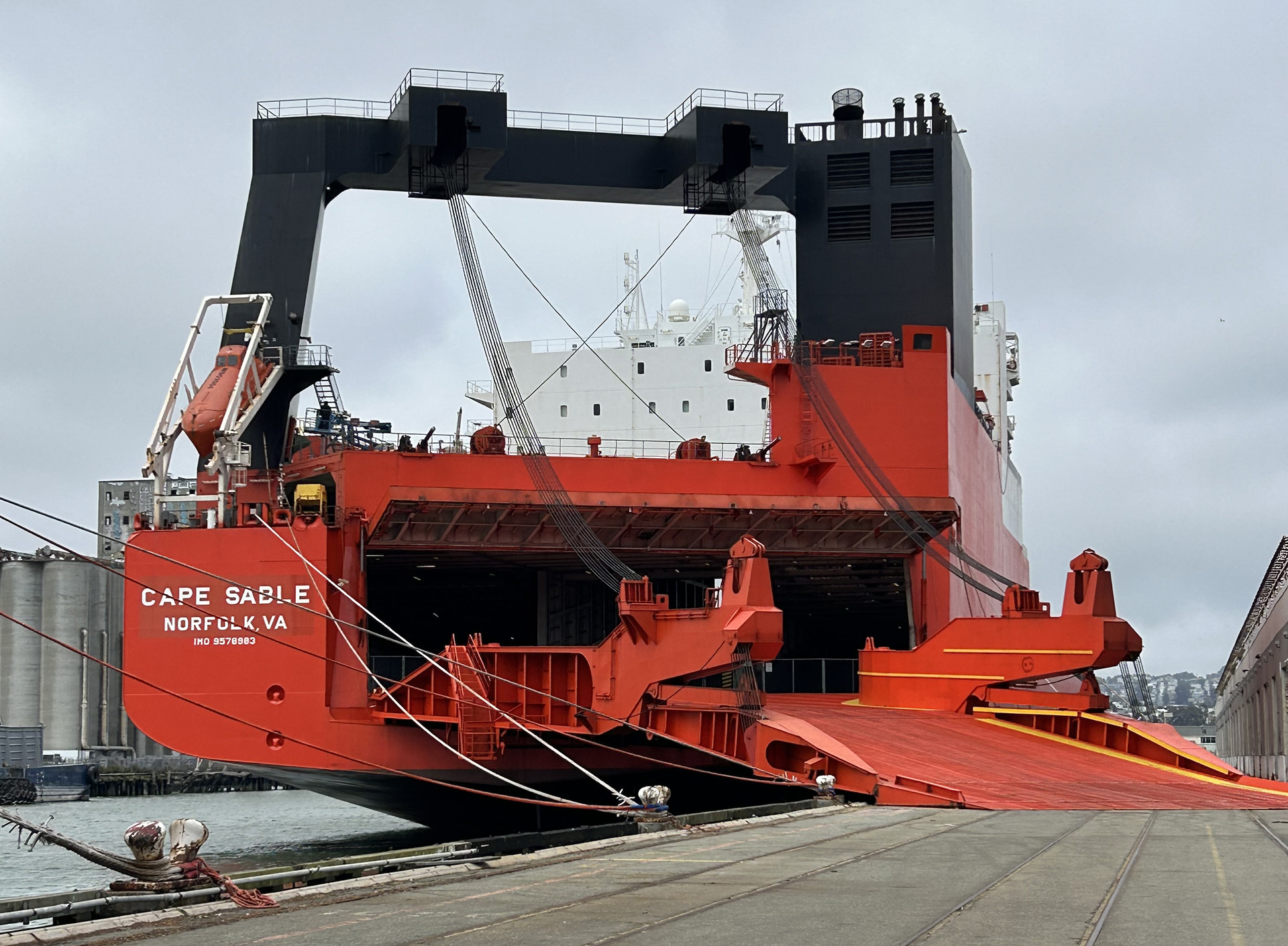
American Maritime Officers working aboard the M/V Cape Sable, here in California in May, included Chief Engineer Gerald Atkins, Third Mate John Connolly, First A.E. Robert Daly, Third A.E. Patrick Devlin, Second Mate Greg Tronti, Second A.E. Remington “Grey” Wilson, ETO Mike Powers and Chief Mate Wilson Ziegenbein.
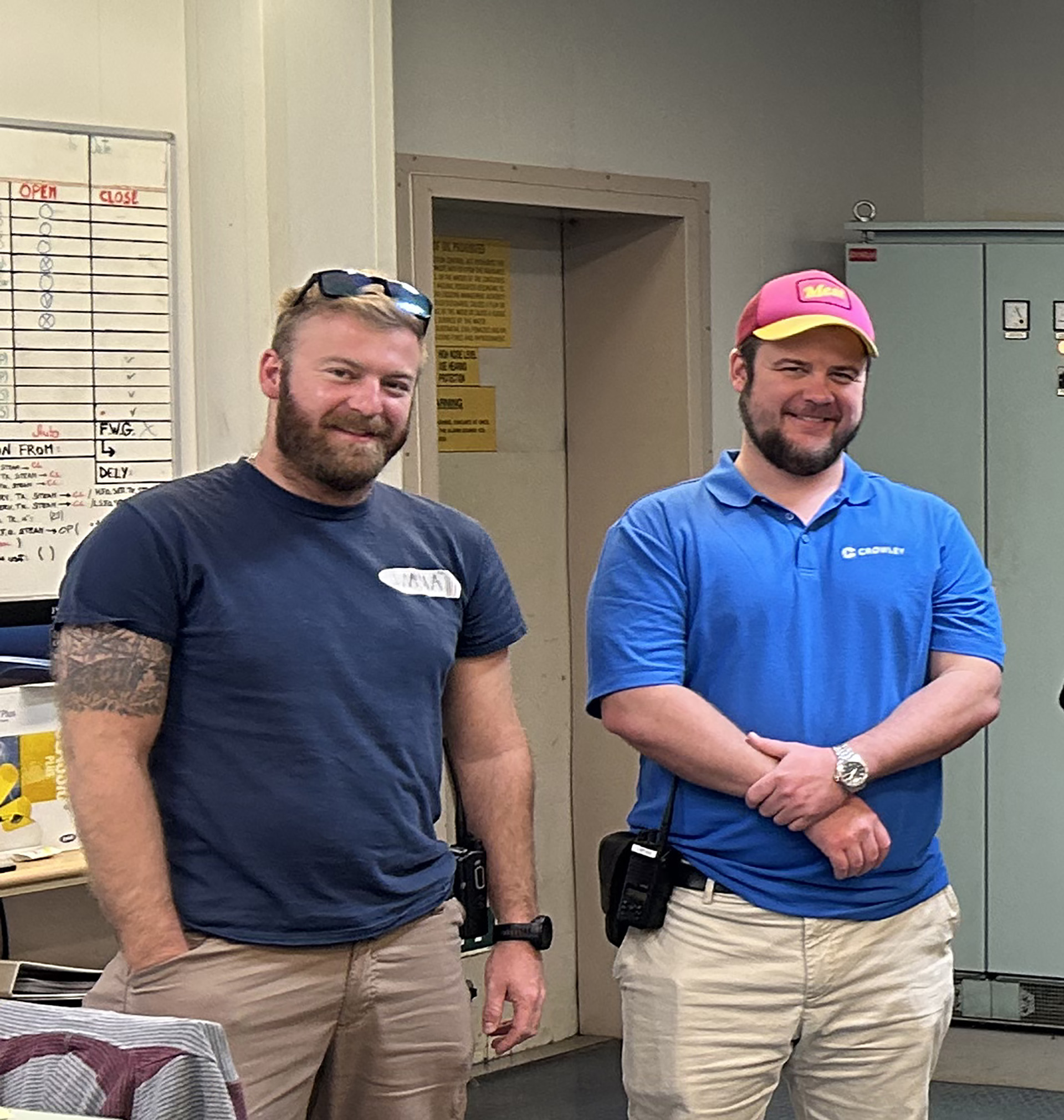 Third Mate Sam Schulte and Captain Andrew Moffitt on the Cape Sable.
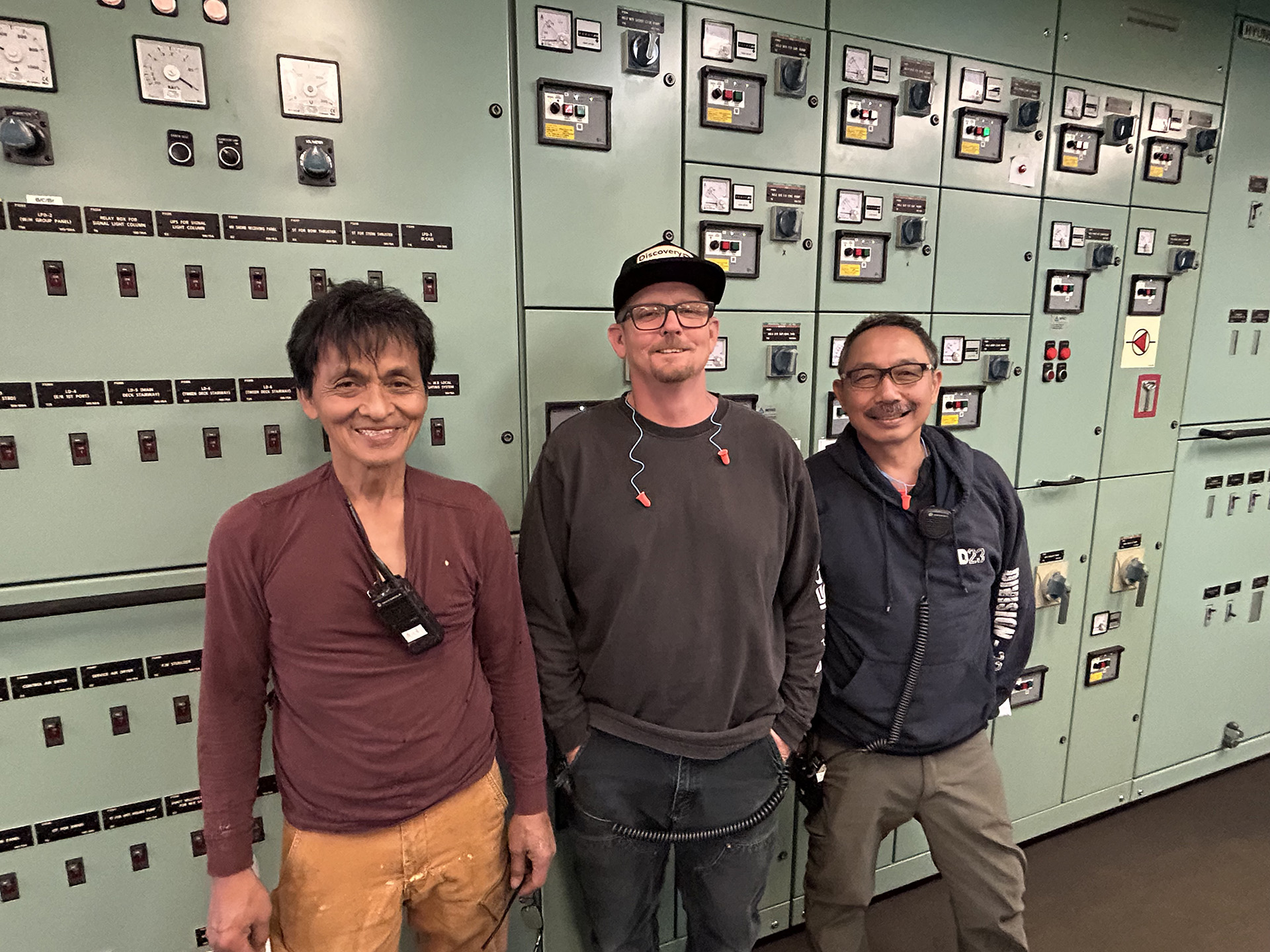
AMO members working aboard the Cape San Juan, here in California in May, included Second Assistant Engineer Marcelino Cayabyab, Chief Engineer Joshua Davenport and First A.E. Ted Yap.
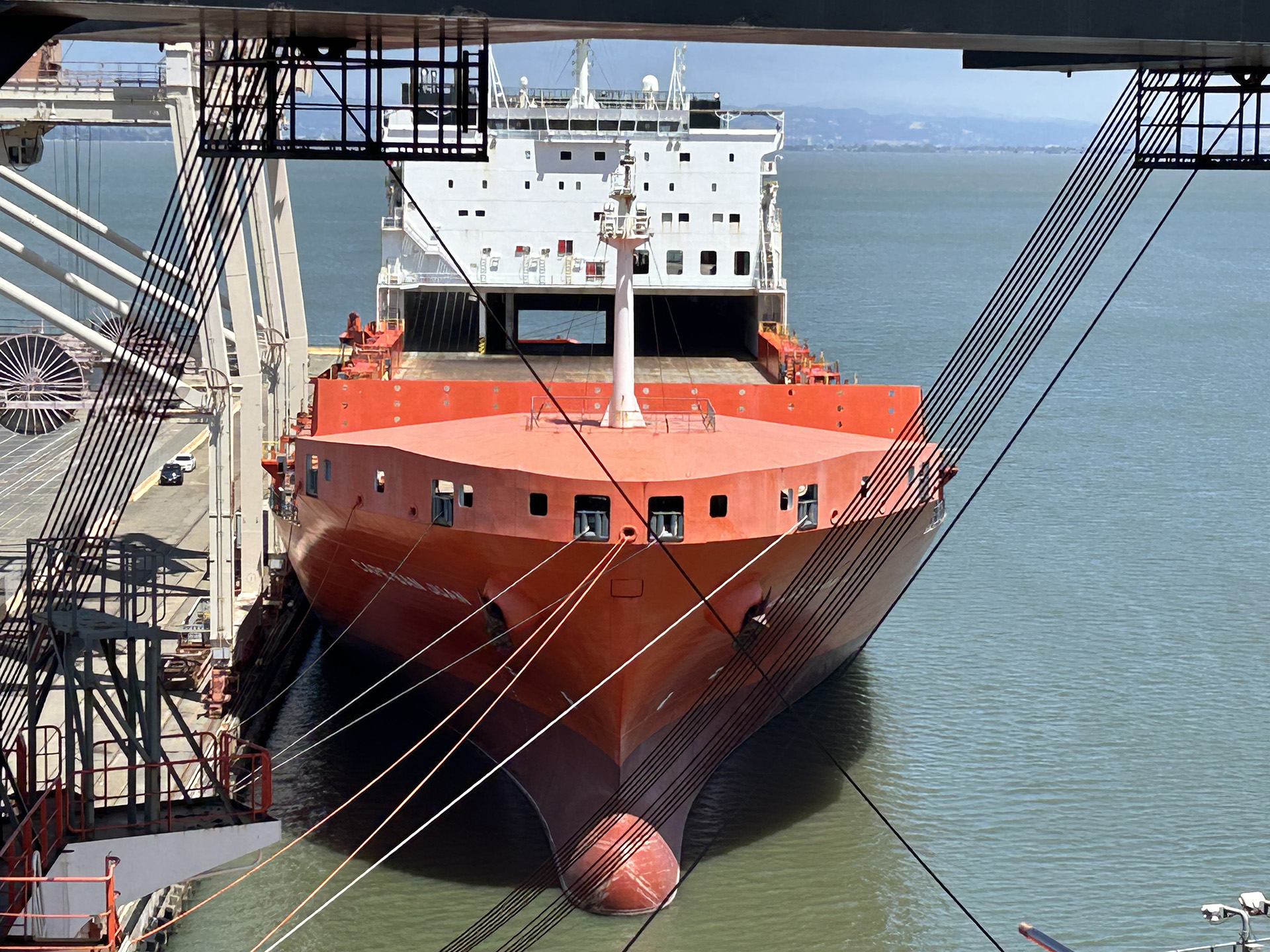
The Cape San Juan and Cape Sable are operated by Crowley Government Services in the United States Maritime Administration’s Ready Reserve Force and are manned in all licensed positions by AMO.
After a long and hard-fought battle with cancer, Executive Director of the American Maritime Officers Plans Steve Nickerson passed away the morning of June 1. His beloved daughter and grandson were by his side. He was 76.
“AMO and AMO Plans lost an icon over the weekend,” said AMO National President Willie Barrere. “For so many years, he was the Executive Director of AMO Plans – a trusted and valued leader, a source of information and guidance for so many AMO members, and a good friend. Steve brought benefit information and his guidance to members everywhere, on ships and at meetings, and never hesitated to pick up the phone and talk to any member about their situation and provide them with answers. He developed and mentored an incredible staff that will soldier on in his absence. His smile and his warm and engaging personality will truly be missed.”
Nickerson was hired as the AMO Plans director of benefits in 1997 and stepped up to the role of executive director in 2002. From the outset, he modeled the practice of actively engaging with the AMO membership to ensure information was shared and answers to questions were available to sailing members and their families.
Known to many AMO members and families, Barbara Skrak will serve as interim executive director of the AMO Plans. The chairman and the secretary of the AMO Plans Board of Trustees asked Skrak to step forward into the leadership role and she will work hand-in-hand with AMO Plans and STAR Center directors to ensure continuity of all AMO Plans functions and duties.
In the coming days, more information will be published and condolences offered as Nickerson’s legacy of service to all AMO Plans participants is honored. New but experienced and trusted leadership carries on with the mission of the AMO Plans in the tradition he helped to build.
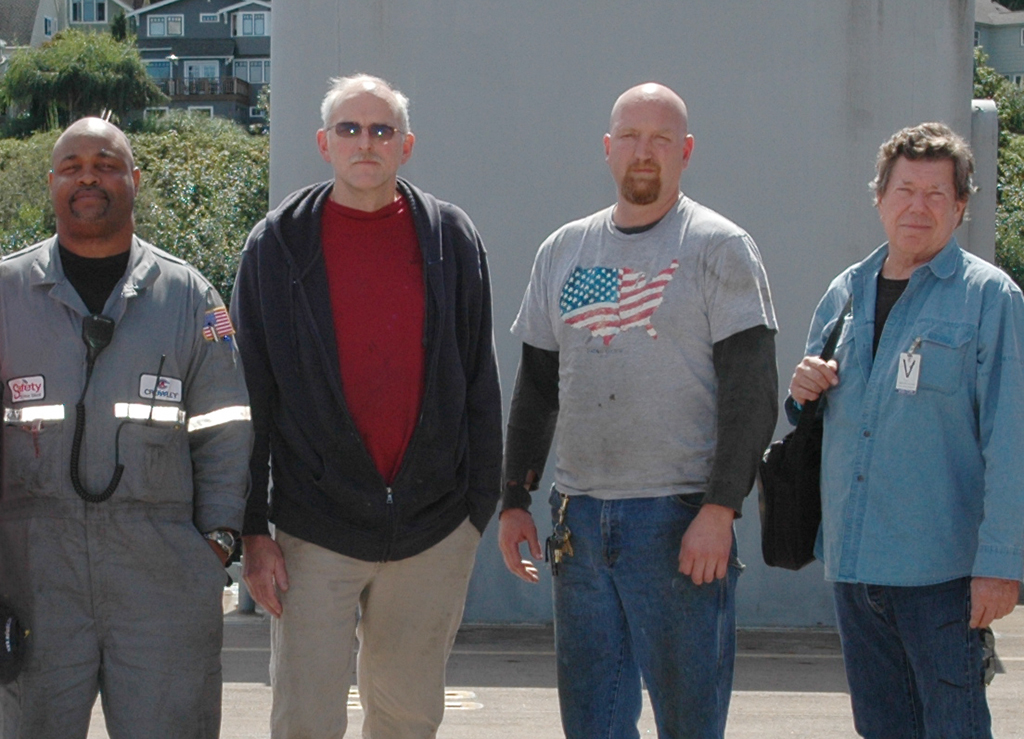
In this file photo, Steve Nickerson meets with AMO members (from left) Scott Williams, Morris Mickelson (retired) and Chris Davis in Tacoma, Wash. in 2013.
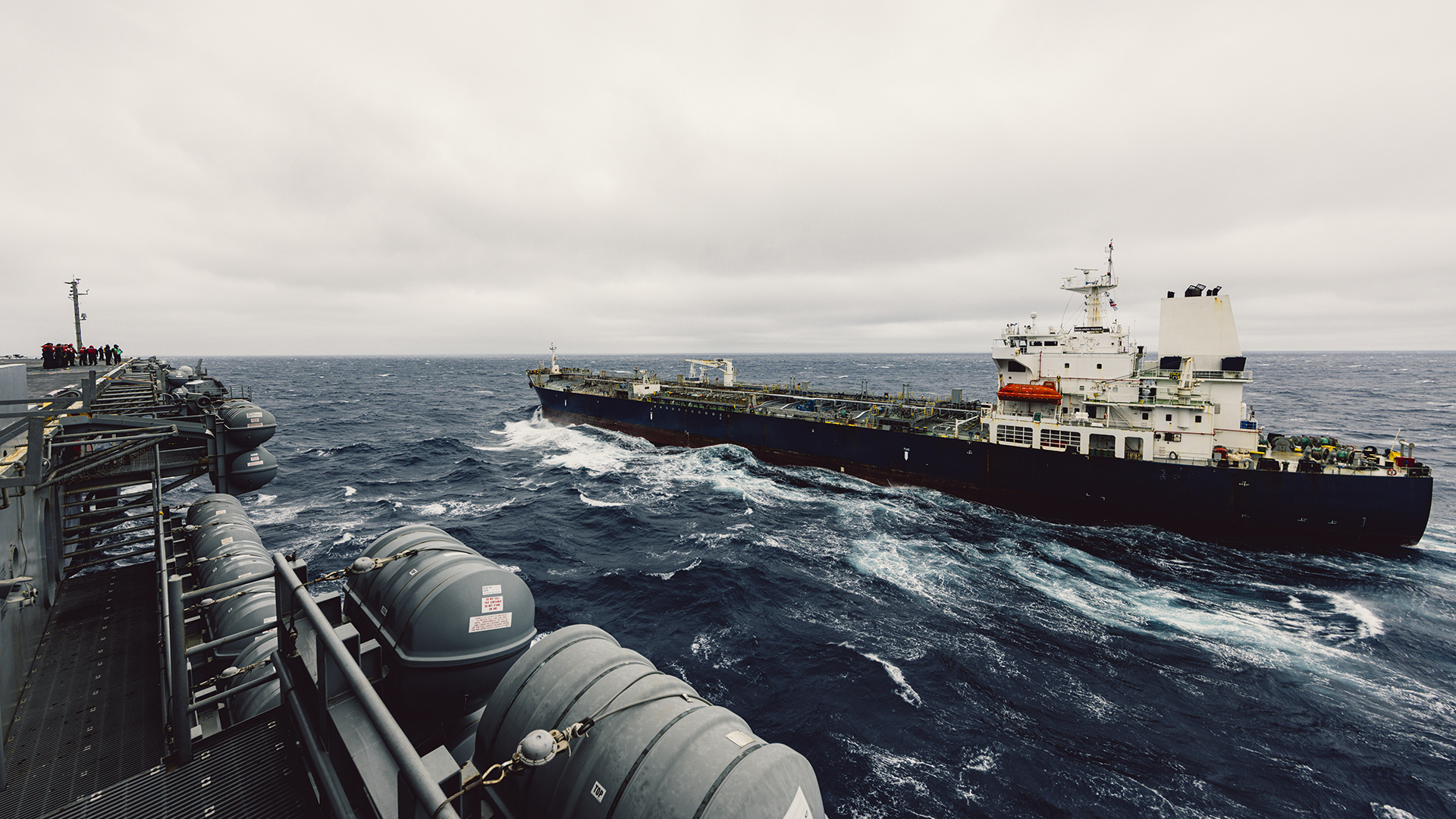
Military Sealift Command chartered ship motor tanker Badlands Trader positions alongside Nimitz-class aircraft carrier USS George Washington (CVN 73) before a fueling-at-sea while underway in the Pacific Ocean, May 28. George Washington is the U.S. Navy’s premier forward-deployed aircraft carrier, a long-standing symbol of the United States’ commitment to maintaining a free and open Indo-Pacific region, while operating alongside allies and partners across the U.S. Navy’s largest numbered fleet. Badlands Trader is owned by U.S. Marine Management LLC and is manned in all licensed positions by American Maritime Officers.


Gunner’s Mate Seaman Emily Nutt fires a shot line on the flight deck of USS George Washington (CVN 73) before a fueling-at-sea with Badlands Trader while underway in the Pacific Ocean.

Fuel lines successfully connected between Badlands Trader and USS George Washington.