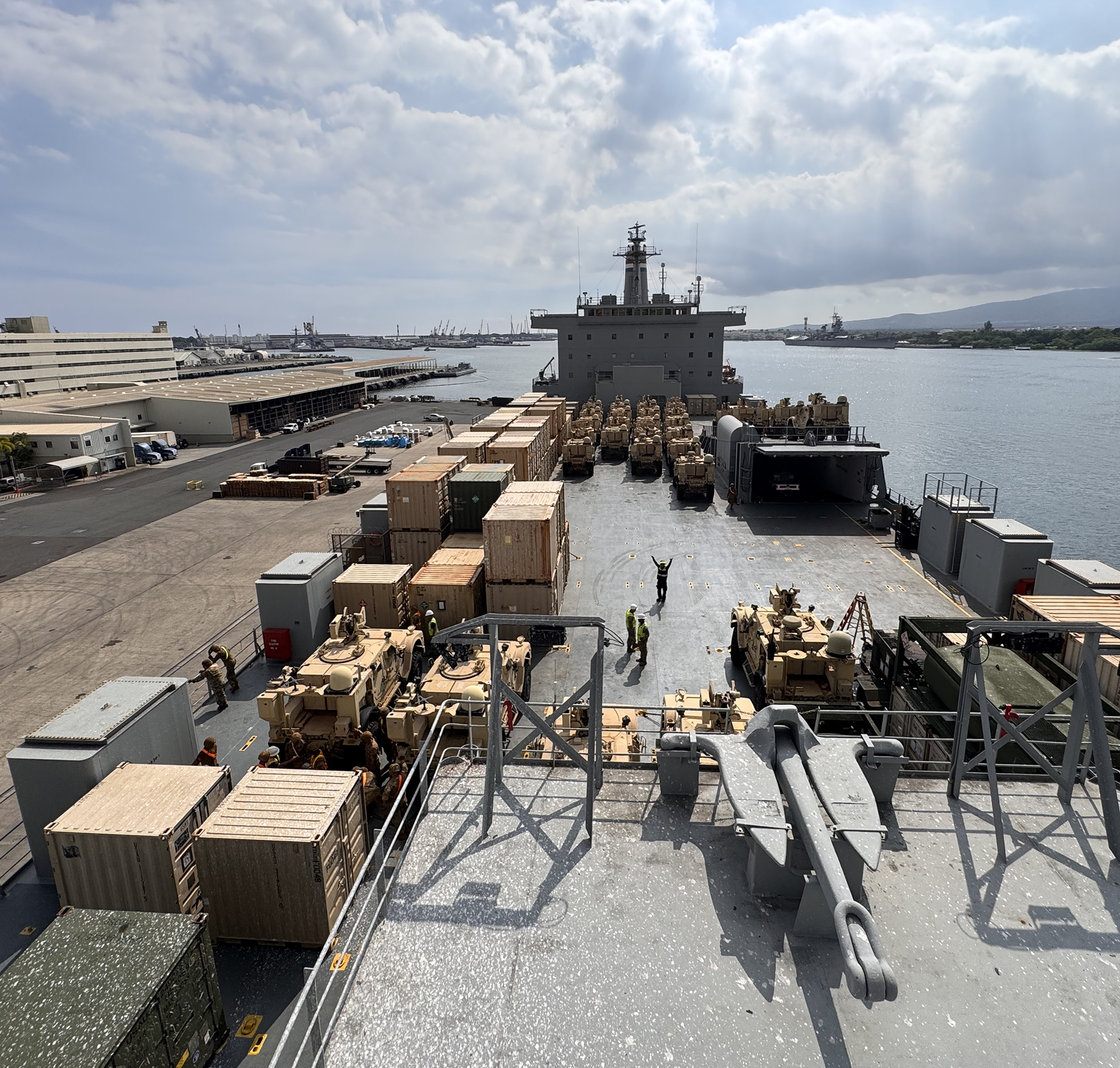
The Ready Reserve Force ship SS Cape Island served in Cobra Gold 2026, delivering military equipment and cargo for onward transportation to exercise sites throughout Thailand. American Maritime Officers represents all licensed officers onboard the ship, which is operated by Ocean Duchess, Inc.
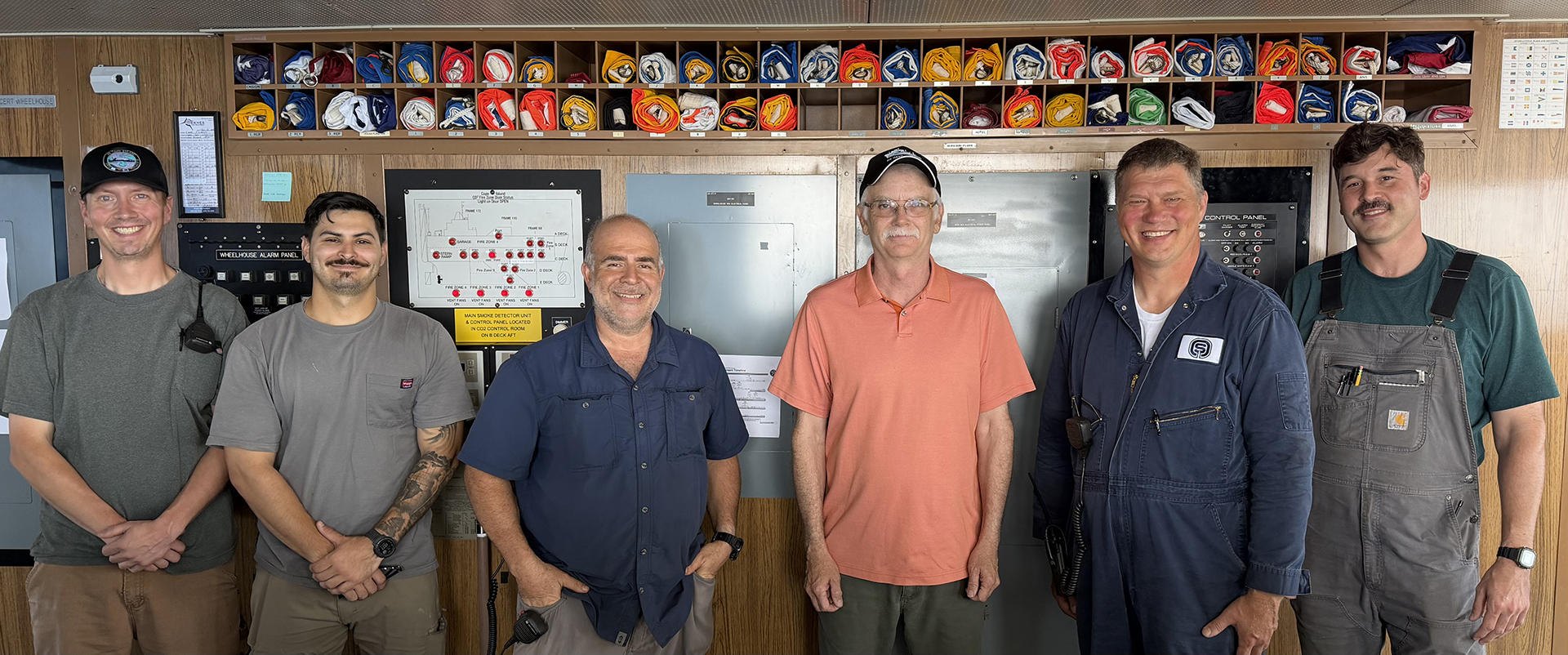
AMO members sailing onboard the Cape Island for Cobra Gold 2026 included Third Mate Josh Smith, Third Mate Caleb Munoz, Cargo Mate Nadir Bousseloub, Captain Gary Vargas, Chief Mate Keith Amberg and Second Mate Ben Rush.
The Cape Island arrived in Thailand in February to offload equipment in support of Cobra Gold. Thailand marked the vessel’s first point of discharge, with offloads conducted at the ports in Thung Prong and Chuk Samet, as reported by Grady Fontana, Military Sealift Command Far East. Cobra Gold 2026 is a joint, multinational military exercise held annually in Thailand and co-sponsored by the Royal Thai Armed Forces and U.S. Indo-Pacific Command.
“This ship is ideal for this kind of mission,” said AMO Captain Gary Vargas, master on the Cape Island. “The combination of the stern ramp and vessel’s crane allows us to discharge cargo quickly. A fully loaded vessel can be discharged in 24 to 36 hours.”
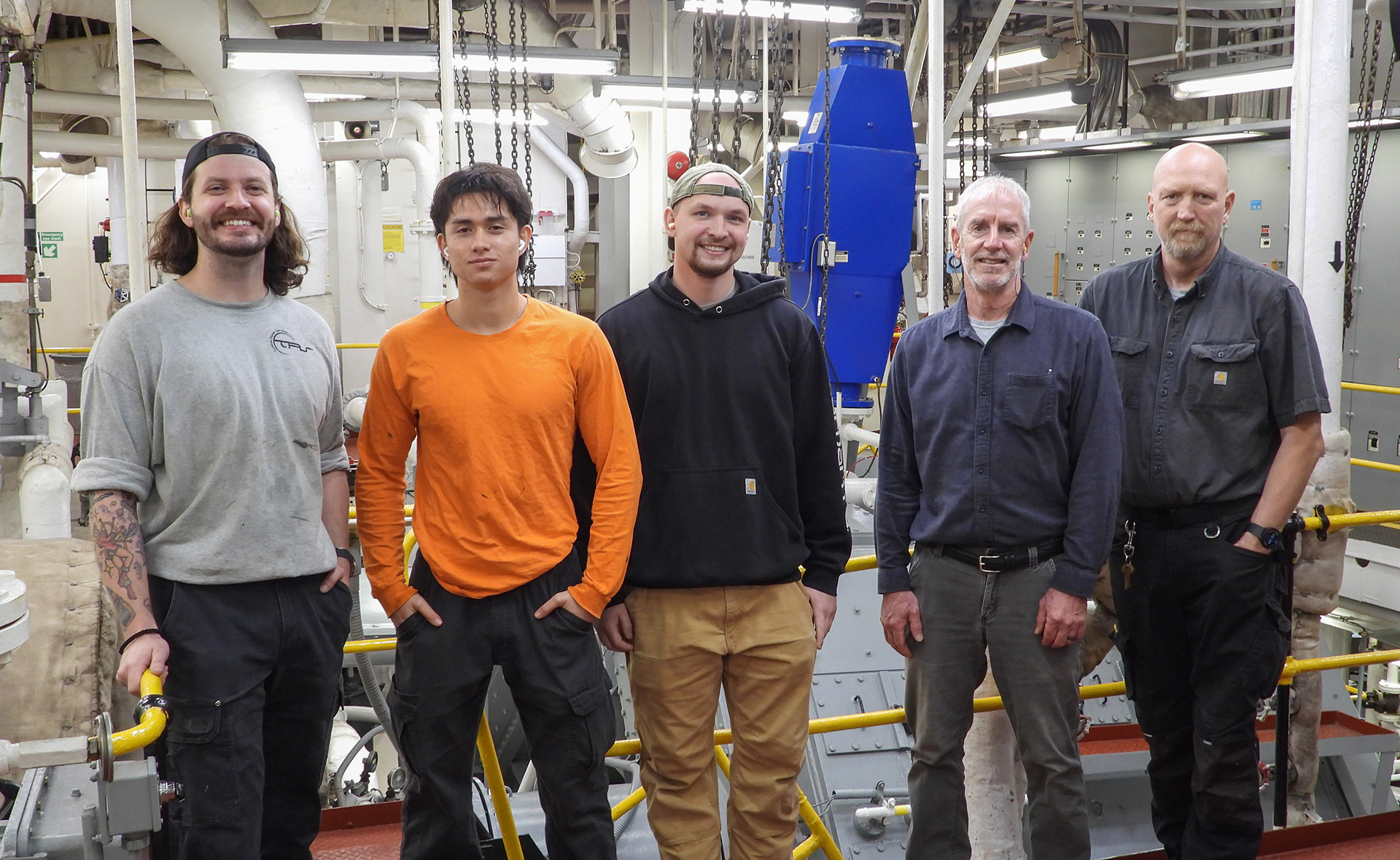
AMO members sailing onboard the Cape Island for Cobra Gold 2026 included Second Assistant Engineer Tom Meaney, Third A.E. Christian Pushard, Chief Engineer Chris Baril, and First A.E. Chris Davis. With them here is Cadet Patrick Novotny.
Cape Island is a 685-foot roll-on/roll-off cargo vessel capable of carrying significant amounts of containerized and RO/RO cargo. When not serving in an activation, such as Cobra Gold, the ship is maintained in reduced operating status (ROS), a specialized crewing and maintenance posture for MSC and Maritime Administration (MARAD) vessels assigned to the U.S. Ready Reserve Force (RRF).
Ships in ROS are kept in a high state of readiness, allowing for rapid activation, while reducing operational costs during periods of inactivity.
Cape Island is part of the RRF, a subset of the MARAD’s National Defense Reserve Fleet, which provides nearly 50 percent of the U.S. government-owned surge sealift capability to support the rapid global deployment of U.S. military forces.
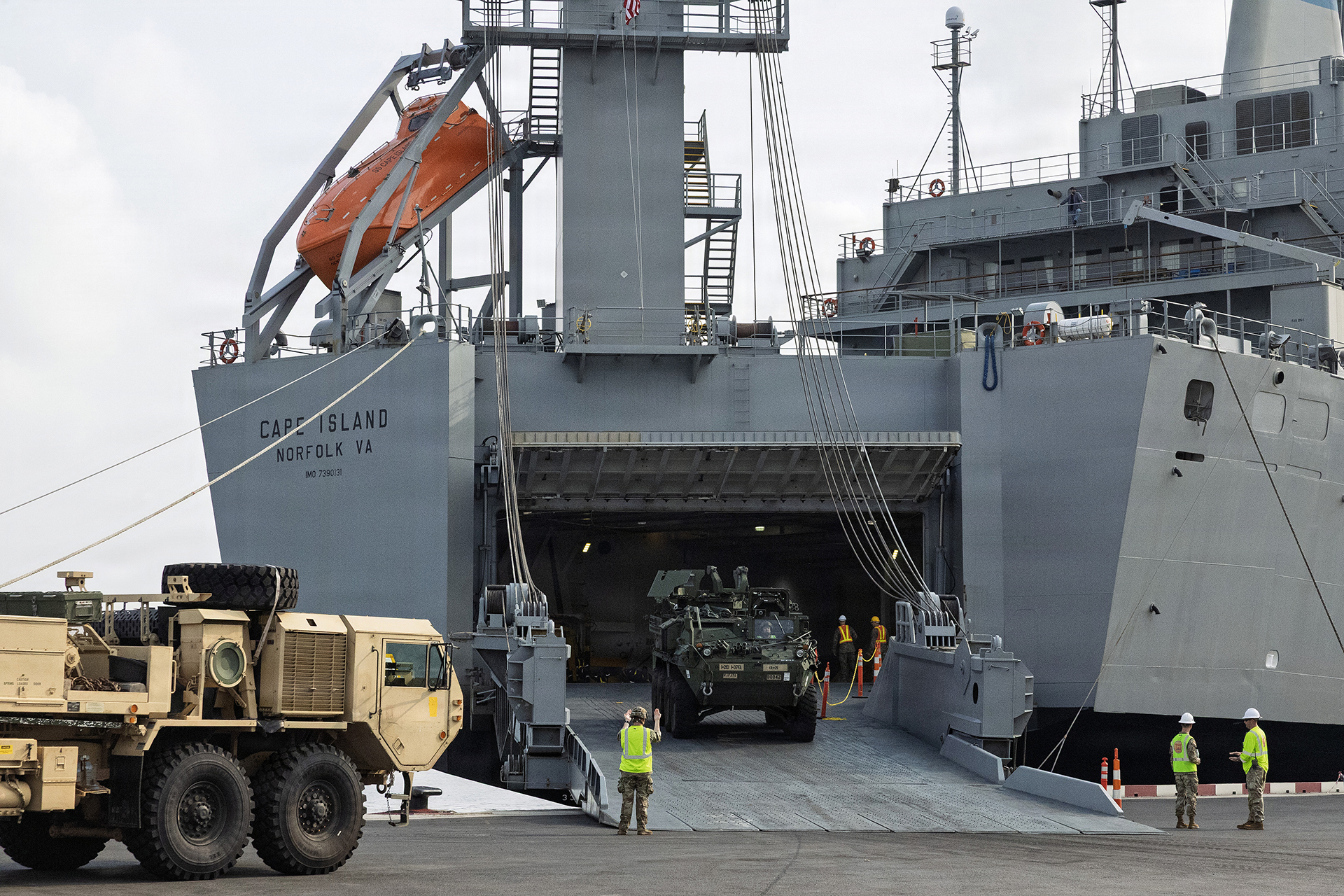
An M1126 Stryker is discharged from Military Sealift Command (MSC) chartered Cape Island (T-AKR 10) at the port of Chuk Samet, Sattahip, Thailand, February 19, during an offload of equipment to be used in Joint Exercise Cobra Gold 2026. (Navy photo by Grady T. Fontana)
To support the offload operations, MSC deployed a reserve component team from expeditionary port units (EPU) across the United States, Fontana reported.
“As an expeditionary port unit, we serve as the liaison between the ship and MSC headquarters,” said Navy Reserve Lt. Cmdr. Joseph Morris, operations officer, Navy Reserve EPU Little Rock, assigned to MSC Far East. “If there are any issues with the offload or the ship, we help address them. This training opportunity also allows us to become more familiar with port operations and engage key stakeholders.”
Expeditionary port units are highly mobile Navy Reserve units capable of deploying worldwide to establish port operations in locations without existing MSC or U.S. Navy infrastructure.
After the exercise, the vessel also made a port calls in Okinawa and Hawaii to offload cargo and to load approximately 140 pieces of “lift of opportunity” cargo. This cargo was loaded, in part, with the vessel’s crane and forklift with assistance from the ship’s crew, Fontana reported.
“There were several challenges for the vessel and crew during the course of the mission,” said Cape Island Chief Officer Keith Amberg. “We worked together to meet them. We were complimented by several different people on the condition of the vessel and the attitude of the crew.”
Cobra Gold is the largest of its kind in mainland Asia and stands as a concrete example of the robust strategic relationship between Thailand, the U.S., and the many other allied and partner nations involved. Cobra Gold 26 demonstrates a shared commitment to building interoperability and advancing common interests throughout the region, Fontana reported.