By Danny Robichaux
National Executive Vice President
AMO contracts provide AMO members sailing in multiple sectors with double-digit gains well above the Bloomberg Law reported 2025 first-year averages. This was achieved with approximately 28 weeks in Collective Bargaining sessions as well as weeks of preparations and documentation before and after negotiations.
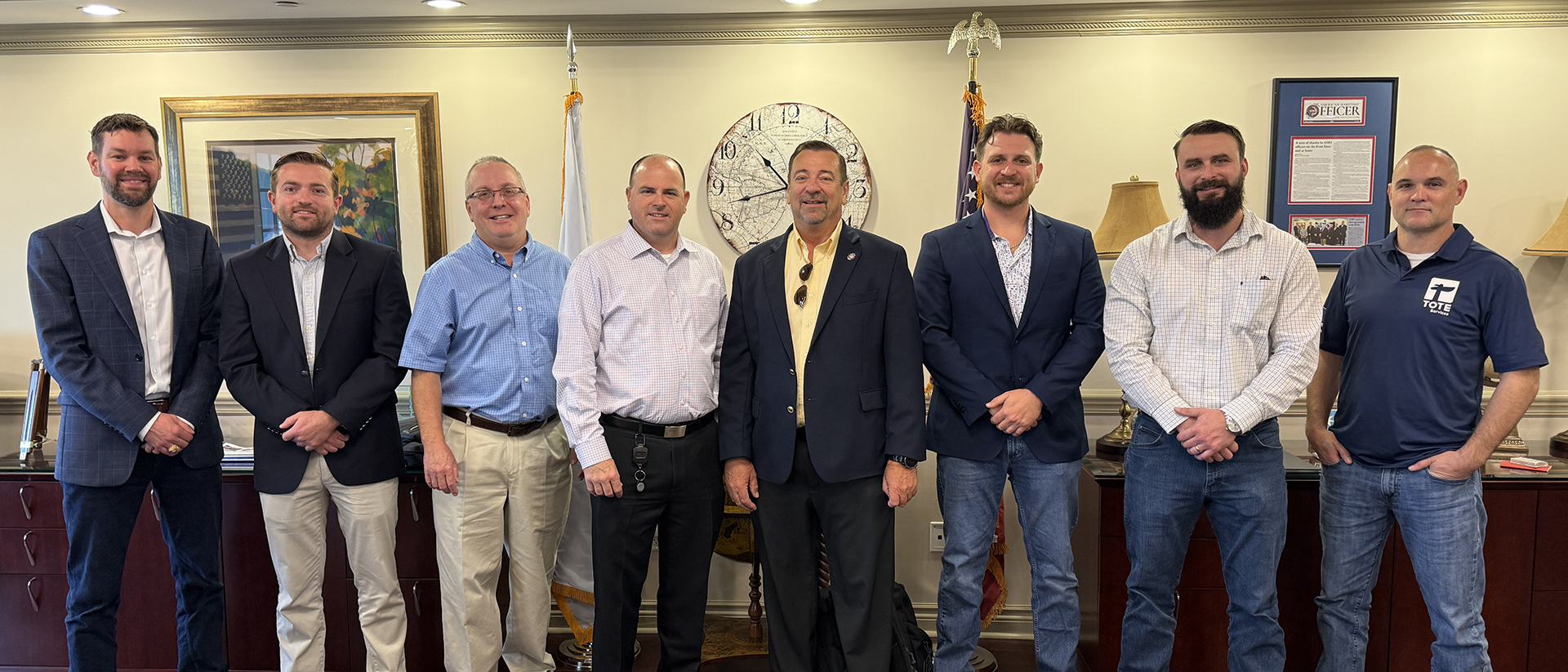
American Maritime Officers members serving on the negotiating committee for the TOTE Orca Class contract included Chris Parks, Nick LeBlanc, Mark Daly, Mike Dusek, Brian O’Connell and Chris Woodward. With them are AMO Contract Analyst Chris Holmes and AMO National Executive Vice President Danny Robichaux.
I thank the AMO membership for providing information prior to negotiations to ensure improved contracts. I also extend my great appreciation to each member who stepped up to participate on AMO negotiating committees. The dedication shown by committee members while representing the officers of their respective fleets is crucial to the AMO membership and our collective bargaining process. Since my direct involvement in deep sea negotiations began in January 2019, we’ve prioritized efforts to increase the number and involvement of negotiating committee members, as well as to enhance the selection process within each fleet. These changes have brought improvements for our membership.
Over the past several years, we’ve experienced unprecedented changes affecting collective bargaining. Specifically, changes in manning and economics – with both spiking and receding over the last few years. Although reports vary depending on the source, making these percentages approximate, consumer price index (CPI) sources reported spiking annual rates of about 8 to 9 percent in 2022, dropping to about 2.7 percent reported for 2025.
Through it all, AMO has remained above the national averages reported by Bloomberg Law, the only source found tracking the data of negotiated union contract gains. As a first for AMO, a search for information for this article produced an AI result of first-year union contract gains that listed AMO as an exceptional “sector variation” of Bloomberg Law’s 2024 national average.
With our member committees contributing to our successes in these recent years, I also want to emphasize the deep financial and historical knowledge of AMO of Contract Analyst Chris Holmes, ensuring the integrity of our contracts. The work of our professional and experienced team, and the valuable input and participation of our member committees, combine to produce significant gains for AMO members at the table.
Bloomberg Law Report
On December 11, 2025, Bloomberg Law reported the following.
“First-year pay raises negotiated in 166 labor contracts ratified in Q3 2025 averaged 5.0 percent, down from the average of 5.5 percent for 183 contracts ratified in Q2,” according to the report.
American Maritime Officers members sailing on a deep-sea contract negotiated in 2025 received an average first-year increase of approximately 10.27 percent, as compared with Bloomberg Law’s reported first-year averages of 5.5 percent in the second quarter and 5 percent in the third quarter of 2025. AMO deep sea commercial contracts negotiated in 2025 provide total average pay increases of 20.12 percent over the life of a three-year agreement.
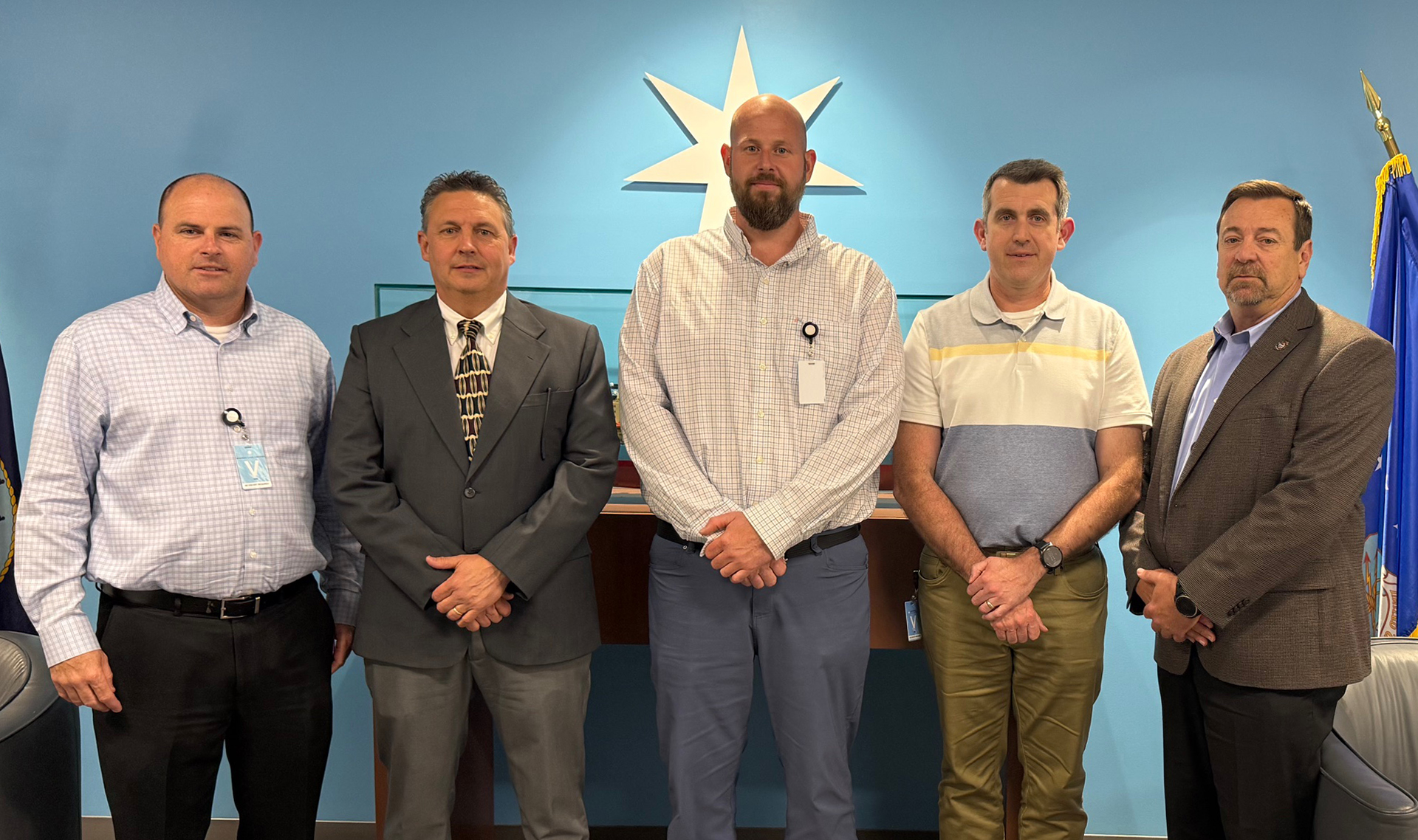
AMO members serving on the negotiating committee for the Maersk Line, Limited contract covering ships enrolled in the Maritime Security Program included Byron Gibson III, David Shellock and Matthew Patriquin. With them are Chris Holmes and Danny Robichaux.
AMO Government contracts arm’s length bargained in 2025 provided a first-year average increase of 11.26 percent.
AMO inland waters contracts negotiated in 2025 provided a first-year average wage increase of 10.56 percent and 19.11 percent over the 3-year term of the agreements. Items such as additional bonuses, holidays, overtime or PTO are not included in this calculation for inland waters.
There was only one Great Lakes contract negotiated in 2025. The various ratings averaged increases of 6 percent in the first year and 28.87 percent over the life of the five-year agreement. These averages do not include additional wages and benefits negotiated for winter work. For the first time, AMO successfully negotiated full contractual recognition for ship masters of a Great Lakes Company (Key Lakes).
AMO’s deep sea and Great Lakes averages are calculated based on wage and vacation pay increases. The averages above do not include many other contractual gains, such as additional turnover pay resulting from shorter rotations, pay for physicals and training, or other similar items that result in dollars on a member’s W-2 at the end of the year.
There are many additional improvements, which vary from contract to contract. All these increases add to the total labor cost we negotiate with the company and can include such things as door-to-door travel expenses, better airline tickets, annual bonuses and increased 401(k) matching contributions.
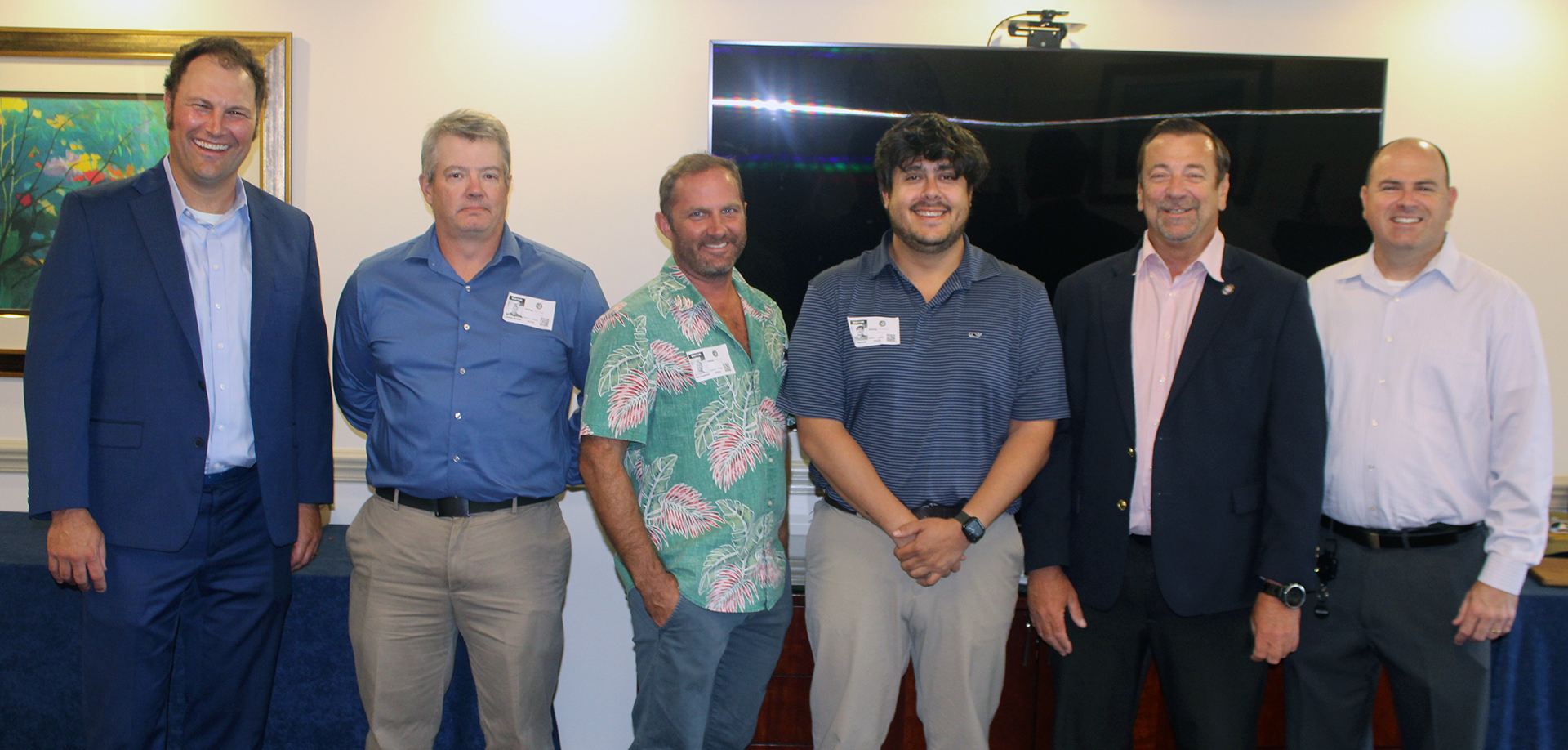
American Maritime Officers members serving on the negotiating committee for the American Petroleum Tankers fleet operated by Intrepid Personnel & Provisioning included Tim Paternoster, Jason Brown, Ben Hopkins and Edward Nichols. With them are Danny Robichaux and Chris Holmes. Negotiations on this agreement spanned several sessions over a period of months. Members not in the picture who participated in negotiations included Roy Kirkpatrick, Steve Moore, Cole Davis, Erv Curtis, Bryant Snyder, Damian Belanger, John Dentino, Derik Stubinski, James Hellum and Timothy Burke.